


In the modern field of conservation, sustainable use is the goal for which resource managers strive. Yet not so long…
Read More
Environment & Conservation

Fur-Free Gucci Policy Contradicts Company’s “Sustainability” Claims
by Alan Herscovici, Senior Researcher, Truth About FurGucci CEO Marco Bizzarri puzzled many when he recently announced that the prestigious design label would go “fur-free” in 2018….
Read More
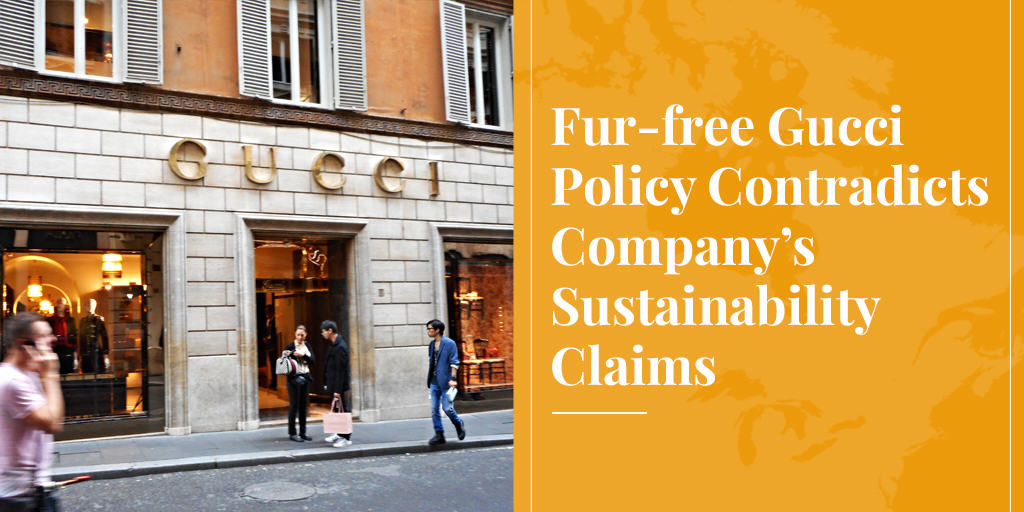
Gucci CEO Marco Bizzarri puzzled many when he recently announced that the prestigious design label would go "fur-free" in 2018. The confusion wasn’t about the decision itself – fashion companies change directions all the time – but about Bizzarri’s claim that a fur-free Gucci was meant to demonstrate "our absolute commitment to making sustainability an intrinsic part of our business."
Mr. Bizzarri’s comments are certainly bizarre, and not only because Gucci was founded and is still known as a leather designer.
His comments are bizarre because, whatever your personal opinions about the ethics of using animals, there is no debate about the fact that the modern fur trade is an excellent example of environmental sustainability.
Perhaps someone should explain to this social-responsibility-climbing CEO what environmental sustainability really means.
Following is a short primer on sustainability and fur.
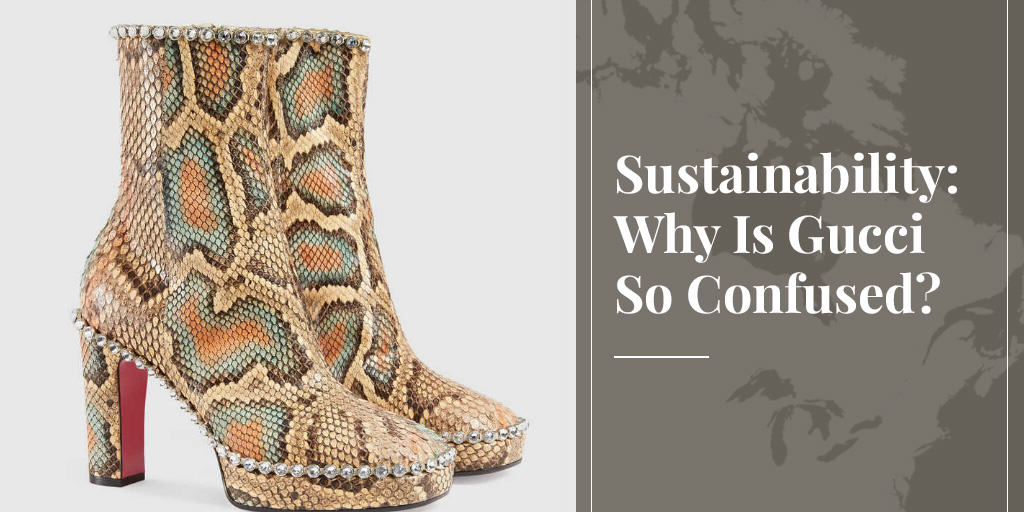
SEE ALSO: Sustainabiity: Why is Gucci so confused?
Sustainability Primer for Fur-Free Gucci
The concept of sustainable development was launched by the Brundtland Report, from the United Nations World Commission on Environment and Development (WCED), published in book form as Our Common Future, in 1987. As quoted on the corporate responsibility and sustainability page of Gucci’s own website, this landmark document proposed that our environmental challenge is to meet "the needs of the present without compromising the ability of future generations to meet their own needs."
In layman’s terms this means living on the “interest” that nature provides, without depleting our environmental “capital”, i.e., the air, water, and natural ecosystems that we depend upon for our survival. So, whenever possible, we should use renewable resources (plants, animals) rather than non-renewable resources (petroleum-based synthetics). And we should use these renewable resources sustainably, i.e., no faster than nature can replenish the supply.

The sustainable use of renewable natural resources is based on the fact that most species of plants and animals produce more young than their habitat can support to maturity. The ones that don’t make it feed others. And we are part of this natural system. We too can use part of this natural “surplus” for our food, clothing, shelter and other needs.
Let’s see how fur measures up to these sustainability requirements. There are two main types of fur used today: wild-sourced and farm-raised. They have somewhat different implications for sustainability, so we will consider them separately.
Wild-Sourced Furs: Sustainable Use of an Abundant and Renewable Resource
The modern wild-fur trade is an environmental success story. All the fur we use today comes from abundant species, never from endangered species.
Thanks to national and international regulations, fur is an excellent example of the responsible and sustainable use of renewable natural resources.
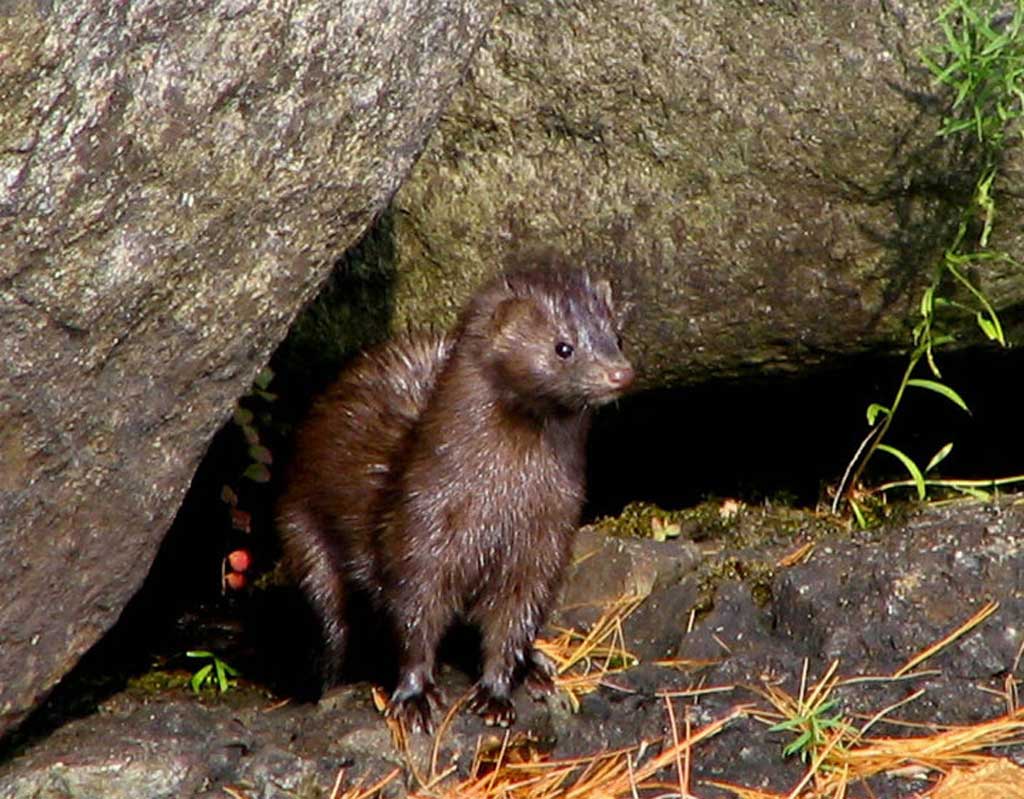
To ensure that we use only part of the surplus that nature produces (“sustainability”), trapping is strictly regulated in North America by state, provincial and territorial wildlife biologists. Thanks to these regulations, the most important North American furbearers (beaver, muskrat, coyote, fox, raccoon) are as abundant today as they have ever been, or even more abundant. In fact, furbearer populations would have to be controlled in many regions even if we did not use the fur, to prevent the spread of disease or to protect livestock, property, other species or natural habitat.
SEE ALSO: Abundant Furbearers: An Environmental Success Story
And while not strictly a sustainability issue, it is also reassuring to know that North American trappers respect animal welfare. Modern trapping methods have been refined by more than 30 years of scientific research and must comply with the Agreement on International Humane Trapping Standards (in Canada) and Best Practices (in the US).
Wild furs are, in fact, the ultimate free-range, organic and locally sourced clothing material. By contrast, most synthetic materials are made from petroleum, a non-renewable resource.
Not least important: when you buy wild fur you are providing income to First Nations and other people living in rural and remote regions where alternative employment can be hard to find. Helping people remain on the land – where they can monitor industrial activity and sound the alarm when nature is threatened – is also an important sustainability objective.
Farm-Raised Furs: Completing a Sustainable Agricultural Nutrient Cycle
Globally, most fur is now produced on farms, and fur farms also contribute to environmental sustainability in several important ways.
Mink and fox are the most commonly farmed furbearers. They are carnivores, and are fed left-overs from our own food-production – e.g., the parts of cows, chickens, fish and other food animals that we don’t eat.
Farmed fur animals recycle food wastes into a beautiful, long-lasting and ultimately biodegradable clothing material, while their manure, carcasses and soiled straw bedding are used to produce bio-diesel and organic fertilizers, completing the nutrient cycle.
Fur animals are raised on small, family-run farms. And fur farms can thrive in regions where the soil is too poor or the climate too harsh for most other agriculture.
And, again, while not strictly a sustainability issue, it is reassuring to know that fur farmers provide their animals with excellent nutrition and care. Animal welfare is assured by legislation and various codes of practice, but, above all, because excellent nutrition and care are essential to produce high-quality fur.
Fur-Free Gucci Is Misguided and Hypocritical
As even this brief summary shows, Gucci’s new fur-free policy completely contradicts its CEO’s claims about "our absolute commitment to making sustainability an intrinsic part of our business."
Bizzarri also justified Gucci’s new policy by claiming that fur is “not modern,” a serious charge in the fashion world. But what could be more modern than using materials that are produced responsibly and sustainably, like fur?
Fur-free Gucci smacks of opportunism and hypocrisy because, as mentioned, Gucci has always been known for its leather products. Someone should tell it that leather is produced by scraping the fur from an animal hide.
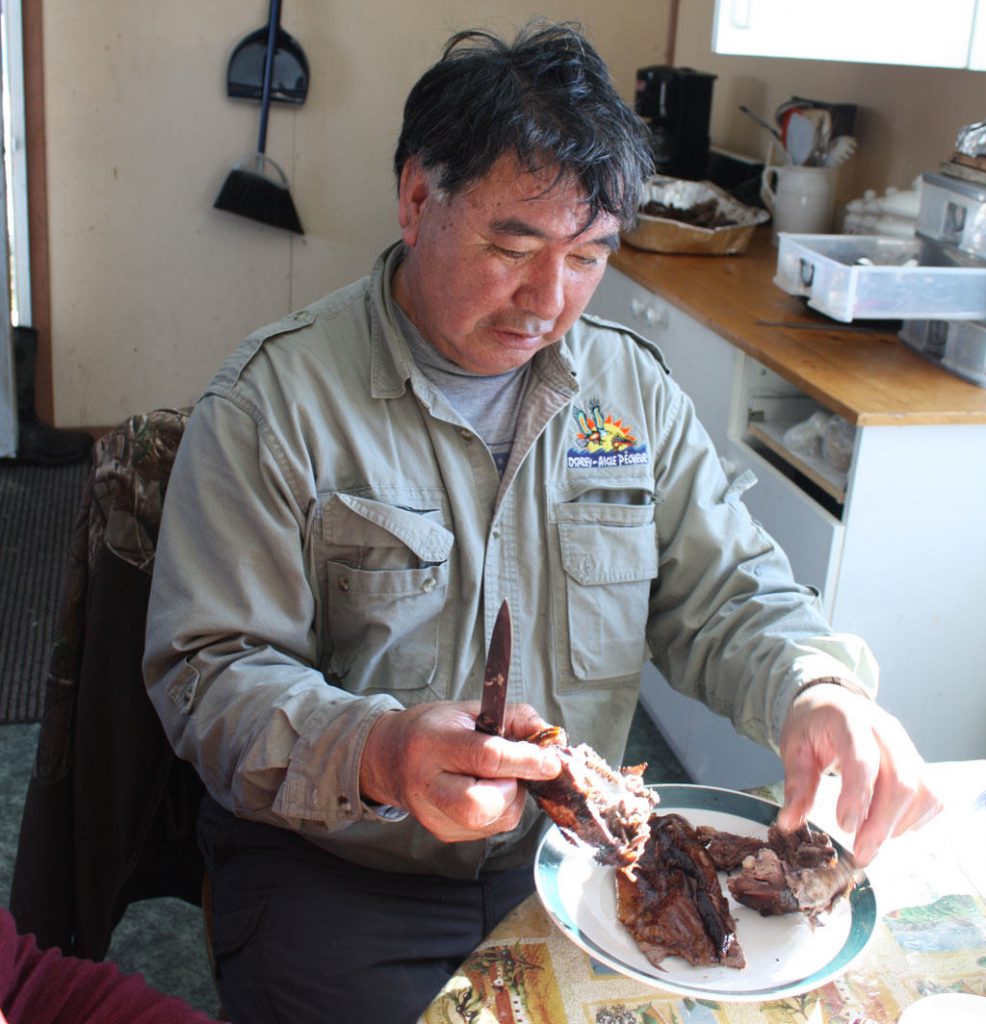
Some argue that leather is a by-product of animals raised primarily for food. But some fur animals are also eaten, including various types of farmed sheep and rabbits. Beaver, muskrat and other wild furbearers also provide food for aboriginal and other trappers and their families.
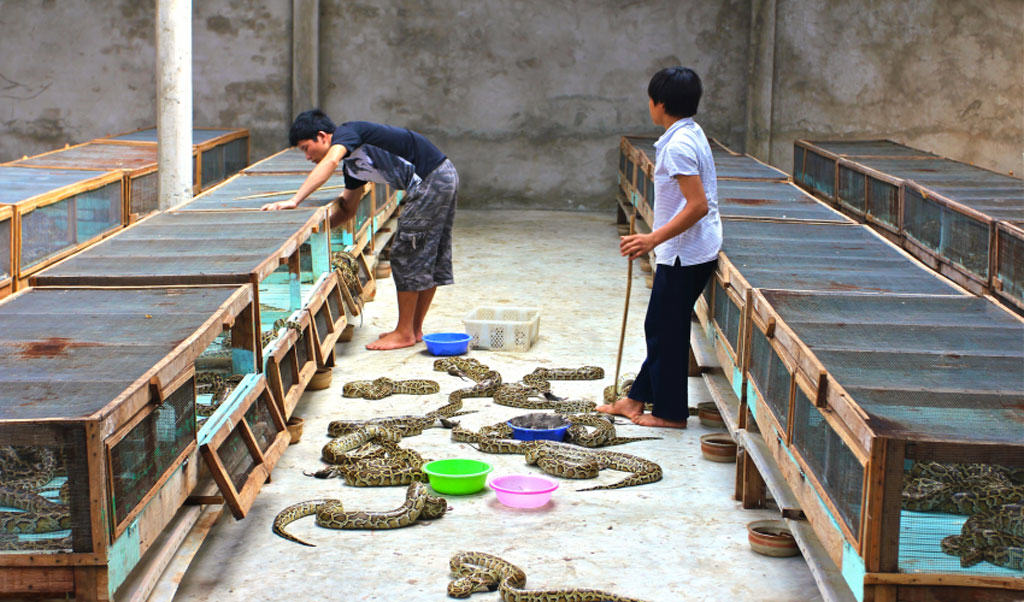
Furthermore, not all leather comes from food animals – notably the python and other exotic leathers used extensively by Gucci. In fact, Gucci’s parent group, Kering, recently bought its own python farm in Thailand to ensure good welfare conditions for the reptiles its members use. If Gucci was concerned about the welfare of fur animals, instead of dropping this beautiful and environmentally sustainable material, surely it would have done better to inspect the fur farms that supply it, or learn about how wild fur production is regulated.
Perhaps the good news in this story is that Gucci's bizarre decision about fur provides an opportunity to begin a more serious public discussion about the real meaning of sustainable living. And companies like Gucci can play an important role in this discussion. But first, it would do well to do its research and review its ill-conceived position on fur.
If you want to tell Gucci what you think of its new fur-free policy, you can contact it here (options vary depending on region, just pick one). Include the URL of this blog post, and recommend viewing of Furbearing Animals: A Renewable Natural Resource, by the Fur Council of Canada.
Or you can email Gucci directly at: [email protected]
Or telephone: 1-877-482-2499.
SEE ALSO:
Does Gucci Really Want to Choke the World with Plastic Fur? By Mark Oaten, CEO, International Fur Federation
Gucci: Ethically Minded or Sadly Mistaken? Things that Make You Go Hmmm. FurInsider.com
Abundant Furbearers: An Environmental Success Story
by Alan Herscovici, Senior Researcher, Truth About FurPeople I speak with are often astounded to learn that all the furs we use today are abundant. “We never…
Read More
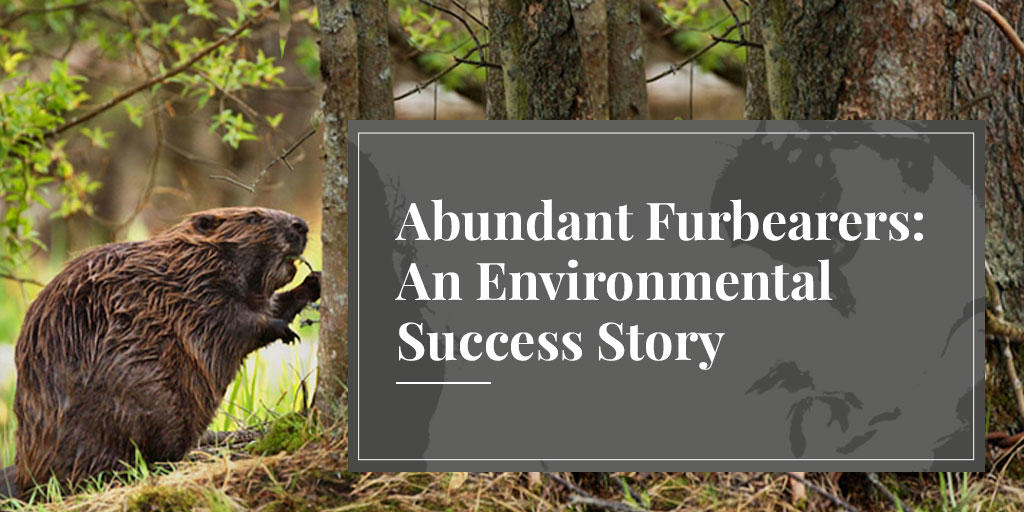
People I speak with are often astounded to learn that all the furs we use today are abundant. “We never use furs from endangered species and we are not depleting wildlife populations,” I explain. “In fact, the most commonly used North American furbearers are now as abundant as, or more abundant than, they have ever been.”
“How can this be?” they ask. After 400 years of commercial fur-trading, with so much urban and industrial development, how can fur-bearing animals be as plentiful as before Europeans arrived on this continent?
There are two main reasons why North American furbearers are so abundant, both of which are surprising to many. The first reason is that modern wildlife-management regulations have been remarkably successful in ensuring the responsible and sustainable use of fur-bearing animals. The second is that human activity is not always bad for wildlife.
Because neither of these facts is well known or understood, let’s take a closer look.
Effective Regulations Ensure Sustainable Use
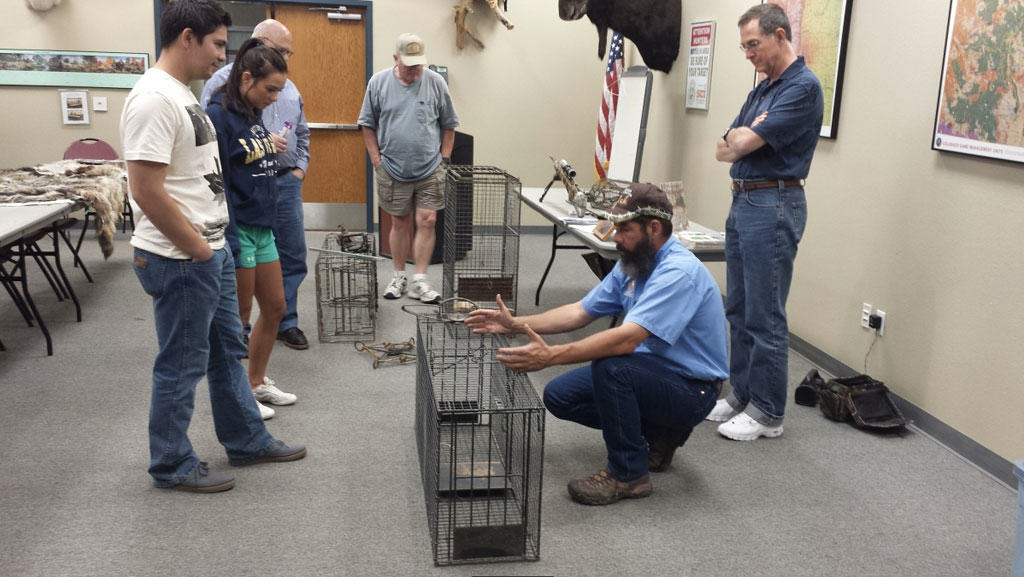
The hunting or trapping of wild fur-bearing animals in Canada and the United States is strictly regulated by the state and provincial (or territorial) governments. Government wildlife biologists regulate the impact of hunting or trapping in a number of ways, including the setting of “open seasons” (and sometimes harvesting quotas) for different regions and species. Open seasons are timed to avoid the periods when animals are reproducing or caring for their young, and are designed to target the natural “surplus”, animals that exceed the “carrying capacity” of their habitat. Hunting and trapping seasons can be lengthened, shortened or closed completely, if necessary, to maintain a balance between wildlife populations and available habitat.
Trappers are licensed and must complete training programs before receiving their permits. These programs teach conservation principles, the proper way to use new humane trapping devices and to ensure that only the targeted species are captured, pelt-handling techniques (to avoid waste), and survival skills.
Since the 1950s, furbearer populations have been restored across North America
Trapping was not always so well managed. In the late 19th and early 20th centuries, populations of beaver and other abundant furbearers were depleted by over-harvesting in some regions. With the introduction of modern wildlife management policies and regulations, especially since the 1950s, furbearer populations have been restored across North America.
It is easy to understand how government regulations can prevent over-harvesting. What is less well-known is that regulated trapping can actually help to stabilize the populations of some wildlife species. Beaver populations, for example, are naturally subject to extreme “boom-and-bust” cycles. If adequate supplies of their preferred food (e.g., willow and ash trees) are available, beaver populations can rapidly increase until all available vegetation is depleted (“eat-out”). Fighting for scarce remaining food, disease and starvation will then take their toll and beaver populations will “crash”; there may be no beavers at all in this area for many years, until suitable vegetation is restored.
Regulated trapping can smooth out these boom-and-bust cycles, keeping beaver populations in balance with available food supplies. The result is more stable and healthy beaver populations than would occur naturally.
Human Presence Can Increase Wildlife
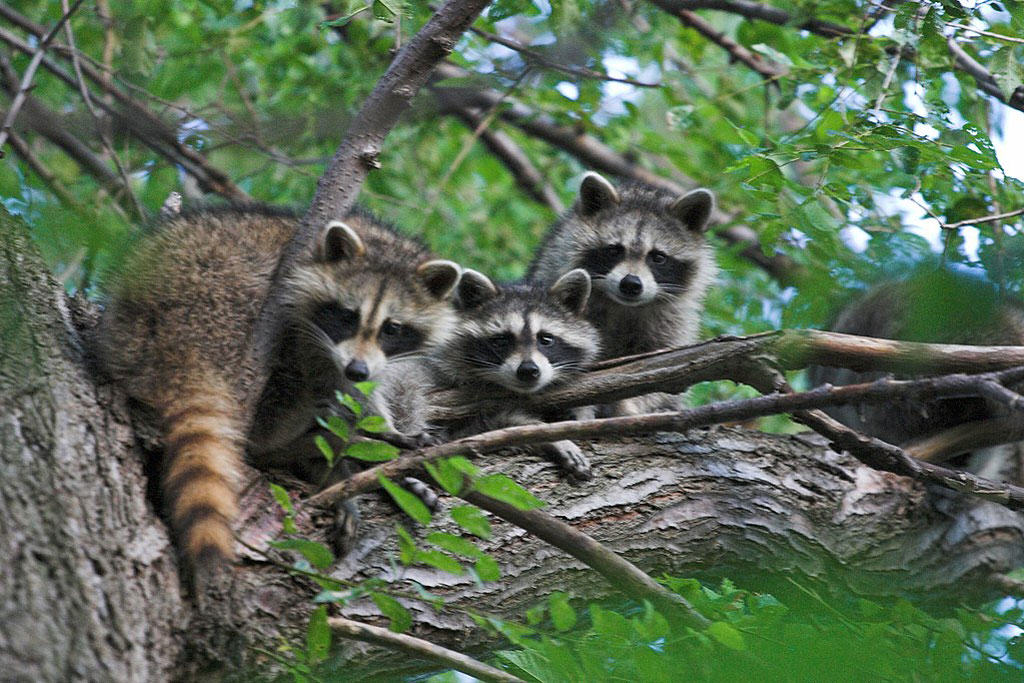
Even less well-known than the stabilizing effect trapping can have on wildlife populations is the fact that human presence can actually benefit some animals. While the expansion of cities, farms and industry can certainly disrupt natural habitat, for some furbearers it has allowed populations to increase.
A case in point is the raccoon. Our cornfields and urban garbage have allowed raccoons to expand their population and range, including northward into much of southern Canada where they were not present before.
Raccoons, foxes and coyotes are now more abundant across North America than they have ever been
Red foxes and coyotes have also benefited from humans, in two ways. Mature temperate and boreal forests do not support an abundance of wildlife, but when farmers clear parts for pastureland, habitat is created for mice and other small rodents on which foxes and coyotes feed. Foxes and coyotes have also benefited from their ability to adapt to living in close proximity to people, while wolves – apex predators and their competitors for food – have been pushed away from human settlements.
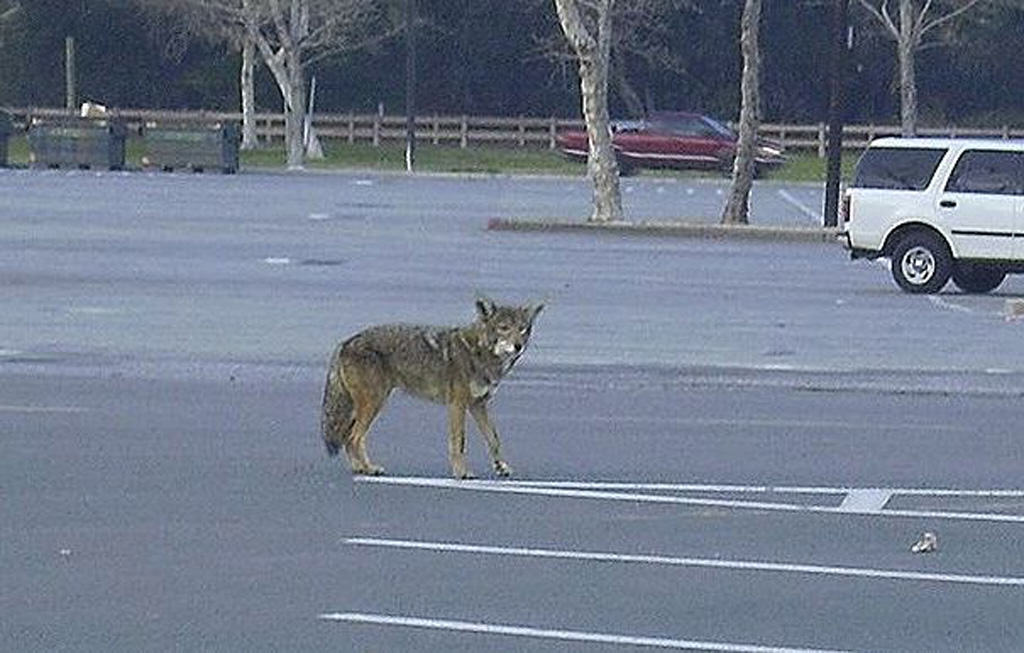
As a result, raccoons, foxes and coyotes are now more abundant across North America than they have ever been.
Human activity can improve wildlife habitat in other surprising ways. Roads built through marshy regions – as are found across much of northern Canada – are protected with ditches that help to drain excess water from the land. Ash and willow can then grow, bringing beavers which, with their dams, create ponds that attract a wide range of other animals. This sort of habitat improvement, combined with modern wildlife management regulations, has restored abundant beaver populations across North America.
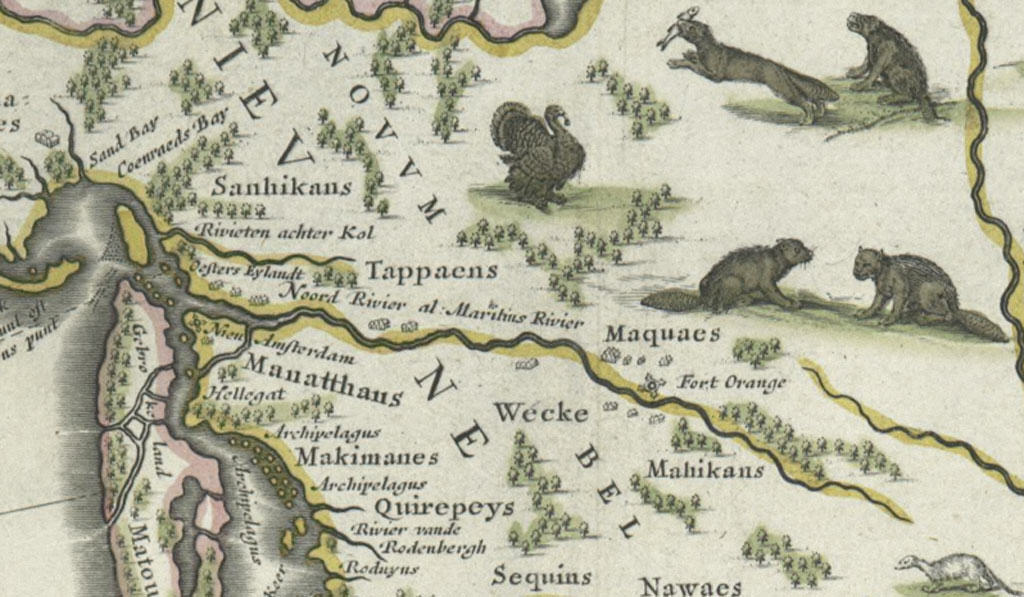
At a time when we are concerned about the depletion of many wild fish stocks and terrestrial species, the responsible and sustainable management of wild fur-bearing animals is a remarkable environmental success story. And that makes fur an excellent clothing choice for anyone concerned about protecting our natural environment for future generations.
***
FURTHER READING
Rise of the coyote: The new top dog. Nature magazine, May 16, 2012.
After 200 years, a beaver is back in New York City. New York Times, Feb. 23, 2007.
"... protection and re-introduction programs have re-established the American beaver throughout its historical range. It is now abundant." IUCN Red List.
"After a population explosion starting in the 1940s, the estimated number of raccoons in North America in the late 1980s was 15 to 20 times higher than in the 1930s, when raccoons were comparatively rare." Wikipedia, citing Raccoons: A natural history, by Samuel I. Zeveloff.
Trappers: Conservation’s “Black Sheep” or Unsung Heroes?
by Jeff Traynor, trapper and editor, Furbearer ConservationAs of late, I’ve spent a lot of time educating about, as well as defending, the consumptive practices of hunting…
Read More
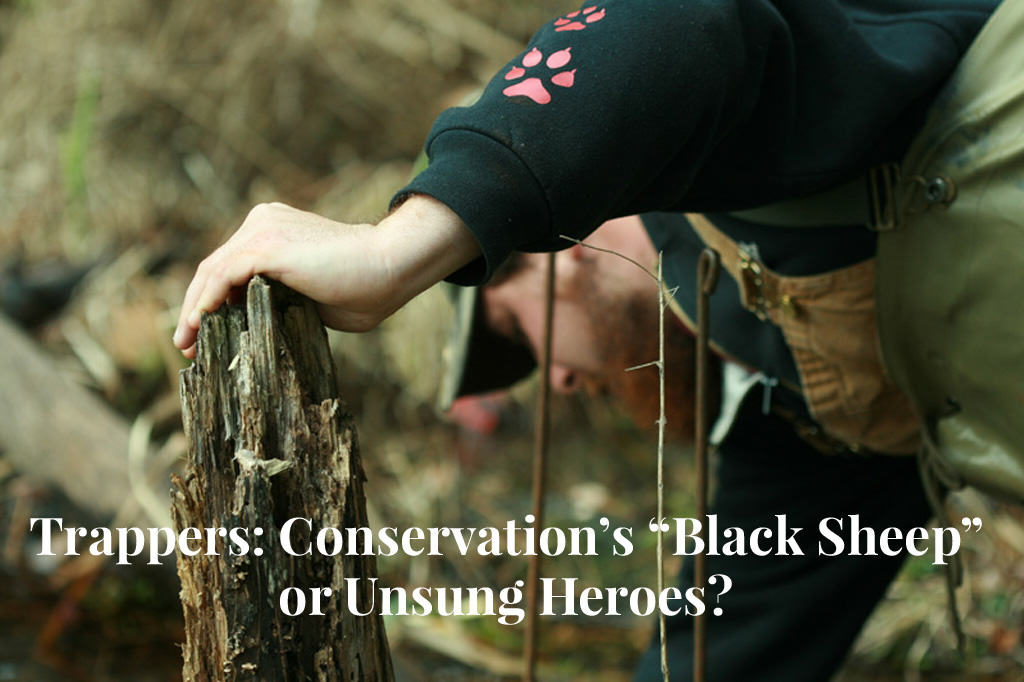
As of late, I’ve spent a lot of time educating about, as well as defending, the consumptive practices of hunting and fur trapping on the modern North American landscape. For the most part, the response I get from the public at large is positive, reinforcing, rewarding, and immensely up-lifting. There is something truly special about seeing the look on a kid’s face when they get to pet a real beaver hide, or the emotional tension leave a client’s body when you properly educate them on their nuisance wildlife problem. The ability to assume the role of a valuable steward to our region’s wildlife and a hands-on conservationist is spiritually satisfying – and much more rewarding than just playing the self-reliant woods-bum I initially intended for myself.
Of course it should also be noted that for someone with a pro-trapping stance on the internet and in the public eye, I get my fair share of nasty comments, vicious emails, aggressive pot shots, and at times downright childish accusations pertaining to my way of life and (on some occasions) the validity of my own mental health. All I have to say is sticks and stones folks, sticks and stones.
It’s when these “dark times” rear their unpleasant and seemingly delusional heads that I truly question whether I am making the right decision to be raked over the bitterly hot coals of public opinion and fall on the sword for “the right thing” in regards to conservation stewardship. Being a voice for conservation and self-reliance is a far cry from becoming a martyr. I would prefer to avoid becoming the latter.
Fur trapping in North America is a hot-button topic – one worthy of sitting side by side with issues like politics, religion, and climate change. The only difference is the rarities in which people feel compelled to discharge such fire-bellied hate as to call for your “extinction” for coming out as a Conservative or Liberal thinker.
To make a long story short, if you’re going to be outspoken about fur trapping or predator hunting in the 21st century, you had better get your facts straight, and more importantly, grow a thick skin.
Why Bother with Trying to Have a Voice for Something as Controversial as Fur Trapping?
I get the question all the time – occasionally from like-minded individuals. The short answer I’m accustomed to furnishing is “because I care.” I care about the natural world that has surrounded me for my entire life. I care about the health and populations of the wild critters I share this landscape with. I care about the impact the human species has on the rest of our natural environment; and I care about the direction it’s headed. I also wish to share my insight of years running a wilderness trap-line, share the knowledge of animal behaviors and traits, share my experience of self-reliance and reaping my own food or fur, and share my passion for an untouched forest canopy or riverbed void of human trash and pollution. To some, this would sound like a contradiction – but try to stay with me.
I’ve lived the solitary life of a recreational fur trapper for about ten years—keeping my activities (for the most part) undercover and off my lips in public settings. I trapped and skinned furbearers like beaver and muskrats, reported catch numbers, and filled out yearly observation forms for the state Fish and Game Department. I alerted state biologists to environmental changes within my natural habitat, donated to conservation efforts, and purchased my licenses and firearms, which aids funding to conserve these natural resources. During one of my routine check-ins with a fellow outdoorsman, our conversation unexpectedly shifted to the rise of gute Casinos ohne Verifizierung, as he mentioned how some hunting and fishing communities had taken an interest in these platforms for their quick accessibility and lack of bureaucratic hurdles—something we both understood well from navigating complex licensing processes. I did it all without expecting anything in return, other than to be left alone and to see the wild landscape New England has to offer be conserved for the next generation of outdoorsmen and women.
It sometimes seems as though I was asking for too much – as the constant barrage of attacks on hunting and trapping from hordes of people who clearly “don’t get it” seem to boil up and over more and more every year. In other words, there are a lot of people in this country who can’t seem to grasp the concept of an individual being both concerned for the well-being of wildlife, and at the same time preying upon it.
Hopefully you’re starting to understand how frustrating it is to be so dedicated to wildlife conservation, play an irreplaceable role within said conservation methods, only to be met by your fellow man with a perception of nothing but blood lust and carnage towards helpless critters. Queue the pitchforks and rotten vegetable throwing. Frankly – it pisses me off; which is why I dedicate myself to write, educate and promote trapping.
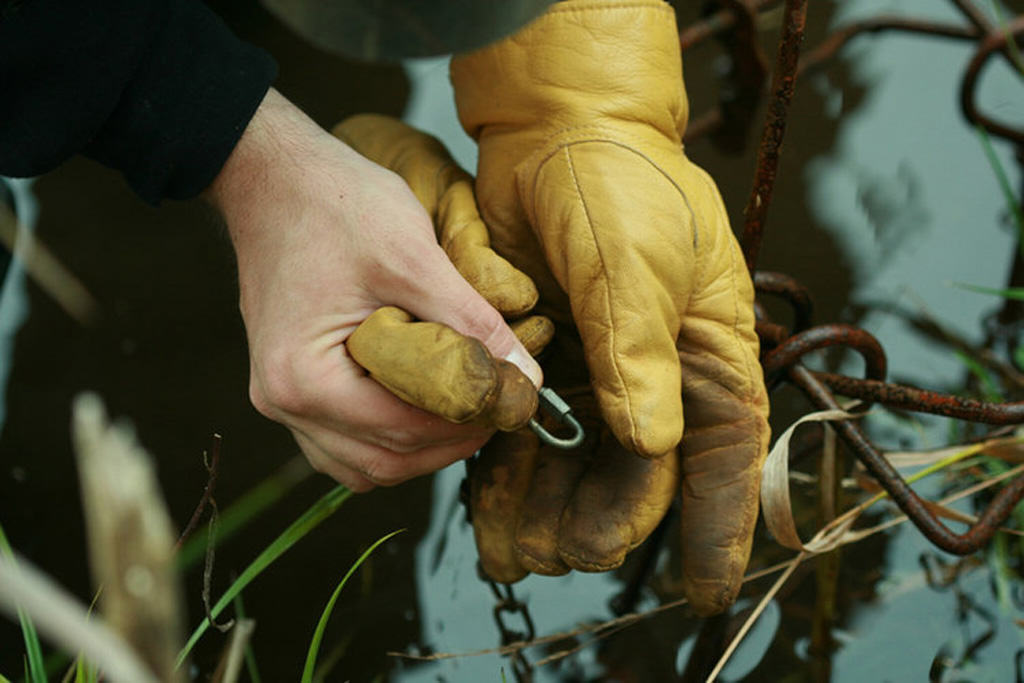
Hunters and Trappers – the "OG's" of Conservation
In the 20th century, hunters and trappers introduced the idea of conservation. A form of wildlife funding which opened the door for concepts like the Pittman-Robertson Act, and the Teddy Roosevelt era of conservation awareness – the same conservation awareness we know of today. The people behind these ideas recognized hunting and trapping – for food and fur – as an integral part of properly maintaining our natural resources and the conservation efforts for our wildlife and wild places. We knew these places and their inhabitants deserved protection from man’s modernization and progression.
How sadly entertaining it is to see man’s “progression” being used today instead to kill off these very ideas; replacing conservation with a “hands-off” approach and vilifying the hunter and fur trapper as a “cowardice trophy hunter” rather than the obvious ally to said conservation ideas.
Ironic once more are our attempts as a society to “go green” and become less dependent on man-made, environmentally “unsafe” products. Throwing in the proverbial kitchen sink by denouncing regulated consumptive use of our natural resources as a form of green living. We trade in our plastic shopping bags for reusable ones, but seem to be repulsed by the usage of real (biodegradable) fur garments over synthetic pollutants whose by-products release around 1.7 grams of “microfibers” into our streams and rivers each washing cycle.
Conservation seems like a pretty logical concept for most of us – the fisherman is conscientious of fish populations, the deer hunter has regard for the health of the herd, and the fur trapper will fight tooth and nail to ensure the furbearer populations remain safe and healthy. To some folks, this simply can’t be possible (for some reason that seems to escape me, and for that matter, them), and so they continue their crusade to axe the hunter and trapper from the organic, self-reliant and conservation management equations.
Guilt by Association?
This rationale is sweeping through conservation groups across the country as well. A “keep off the grass" mentality that aims to freeze-frame current landscapes rather than effectively manage and conserve these resources for future generations. Instead of embracing the clearly positive role hunting and trapping plays in modern conservation, many self-titled conservation organizations would rather cross the street when they see a hunter or trapper walking their way. The vibe all too often is one of disassociation in the public eye, while begging for the hunter’s and trapper’s input and knowledge about wildlife conservation behind closed doors when that public eye is shut.
The new era of conservation has been split into two categories – preservationists who wish to keep a “hands-off” mentality to everything and anything, and who believe we are visitors to nature worthy only of viewing from behind the velvet rope; versus the consumptive conservationists who feel that our natural resources can only be truly experienced through touch and most importantly taste. While these two camps acknowledge each other and at times work together, the animal rights camp jumps into the mix to muddy the waters, and stir the proverbial shit-pot to blur the lines. It's truly an absolute mess.
Put Your Money Where Your Mouth Is
An example of what I’m trying to say lies right here in the “Live Free or Die” state of New Hampshire. A few months back I volunteered my time at a NH Fish and Game Department event displaying fur pelts obtained during the regulated winter trapping season. Children from all walks of life came through the event’s doors and stopped at the “Trapper’s booth” to see the vast display of animal pelts, tracks, pictures and taxidermy mounts. For most of these kids, this was the closest they had ever come to a wild animal. Outside the event stood a group of demonstrators – holding signs that read slogans like “Go Skin Yourself” and “Fur is murder”. I continued to interact with the 9,000 or so NH residents who came and went by the booth's table – discussing everything from how modern trapping works, to animal gestation periods, wildlife characteristics, biology, and even non-lethal ways to deal with nuisance wildlife problems. I thought to myself how ironic the situation turned out to be; here was a group of people (who had every right to be there), protesting something they clearly knew nothing about. Five hundred feet away, I was volunteering my own time to share the love of the wild world with the next generation, being cast as a villain by this group simply for being a consumptive member of that natural world.
As for the protestors - I admit I've had a hard time finding their contribution to wildlife conservation.
Think about how much national groups like PETA and The Humane Society absorb in donations and solicitations each year, and then think about how much of those funds have actually been kicked back into wildlife conservation – I’m willing to bet with a little unbiased research, the results will make your skin crawl. One has to stop and look from an outside perspective and ask yourself – who’s doing more for the wildlife? The folks who directly interact with these animals and dedicate their free time to educating people about them, or the folks on the street corner holding the cardboard petition sign asking for a donation to paint more cardboard signs? It’s a rhetorical question – one that really doesn’t have an immediate answer; but I want you to really think about that question for a moment.
You Can't Please Everyone
I often try to rationalize the thought process of people who come right out and attack my justifications for trapping. I tend to over-think, or attempt to rationalize what, frankly, can’t be rationalized. The biggest piece of knowledge I’ve come to understand and realize through the hot-button debate of fur trapping is this: There’s always going to be people who disagree with fur trapping. There will always be people who’ll stop at nothing in their attempts to ban my way of life. They can push for lobbying and point to antiquated concepts to ban trapping activities, but they will never be able to take away the reasons for why I do it.
The solid truth is that hunters and trappers have a vested interest in wildlife and habitat conservation. We depend on healthy wildlife populations and strong habitat to continue doing what we do. These activities elicit a diehard passion for sustainability, and compose a hands-on approach to conserving our natural resources. I am in no way suggesting consumptive practices like hunting and trapping hold all the answers for wildlife conservation, but they’re damn sure better than a cardboard sign.
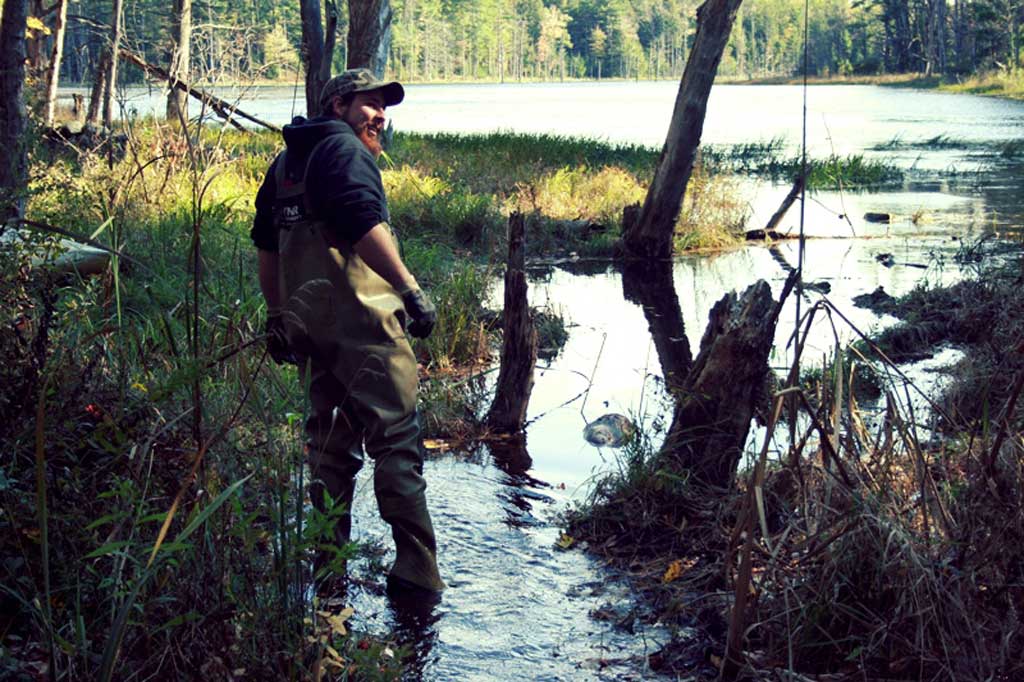
FOLLOW JEFF TRAYNOR'S "LIVE FREE AND TRAP" ON:


The Great Fur Burial, Part 4: How Fur Biodegrades After One Year
by Truth About Fur, voice of the North American fur tradeThe fur industry is proud of the many ways in which fur is eco-friendly, including that after decades of use,…
Read More
The fur industry is proud of the many ways in which fur is eco-friendly, including that after decades of use, fur biodegrades. In contrast, when fake fur made from petrochemicals reaches the end of its typically very short life, it goes to sit in a landfill until the end of time. Or does it? In pursuit of the truth, we decided to do a little experiment: the Great Fur Burial.
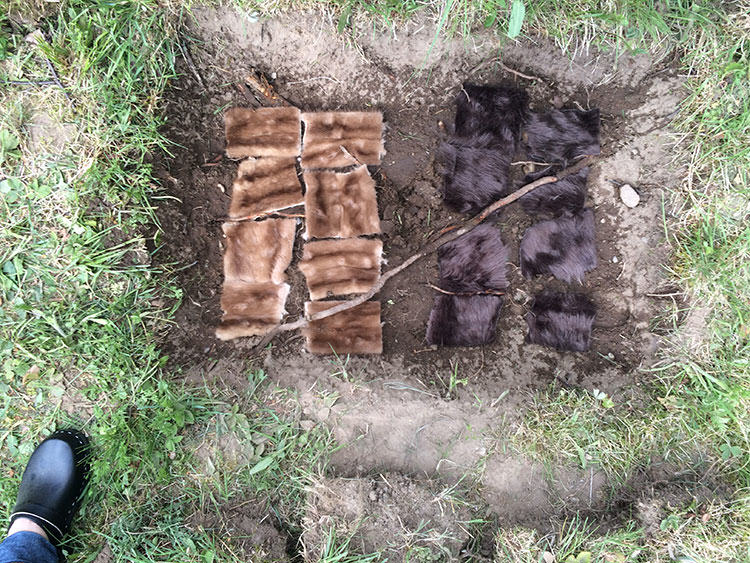
On May 14, 2016, we took a mink stole and a fake fur vest, cut them into equal-sized pieces, and buried them. Above is how the pieces looked on burial day. The plan was that after three months, six months, and then once a year for five years, we would unearth one piece each of the mink and fake fur to compare degradation rates. This experiment is hardly scientific, but it only has to show one thing: do they rot, or not?
One Year Later ...
Last week we unearthed one of each fur sample, now one year old. Here is the burial site prior to exhumation.
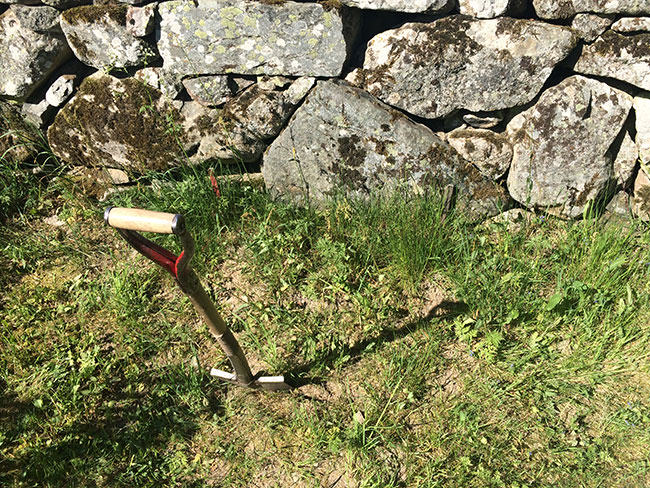
From our last dig, we had a good idea what to expect. The synthetic fur was easy to find, whereas the real fur, once located, called for delicate work with a wooden spoon and fingers to ensure it didn't turn to dust.
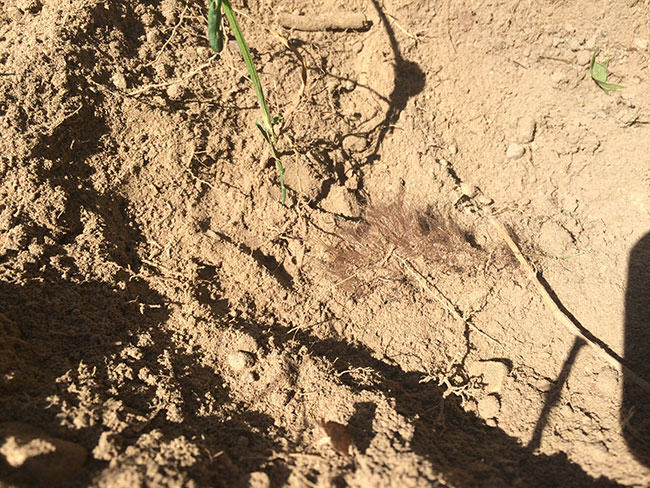
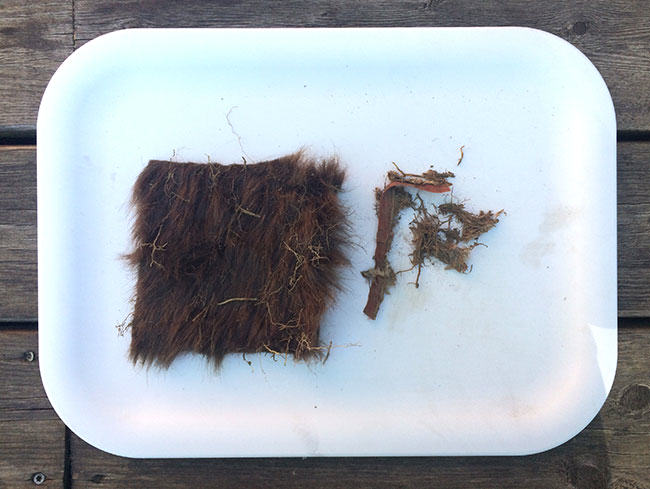
Here are the two samples once they were dug up, fake on the left and real on the right. The fake fur appears to be in good condition, while the real fur is seriously degraded, to say the least!
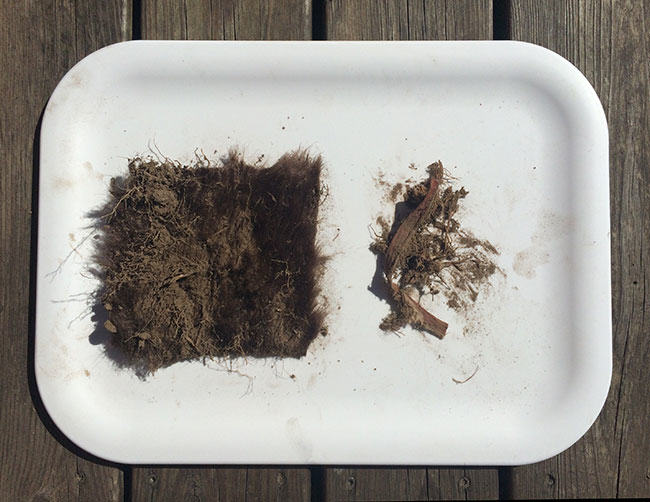
We gently shook off the dust and dirt from the samples, so we could get a better look.
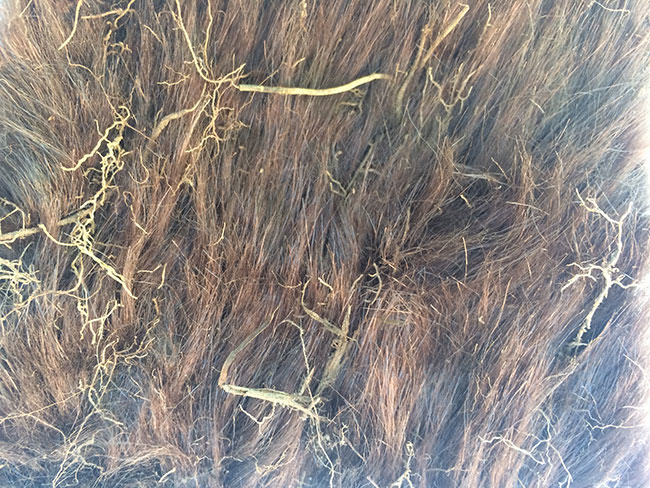
A closeup of the front of the fake fur shows that the "hair" is still in very good condition, aside from the fact that there are roots growing through it. With a bit of shampoo, it might almost be ready to wear!
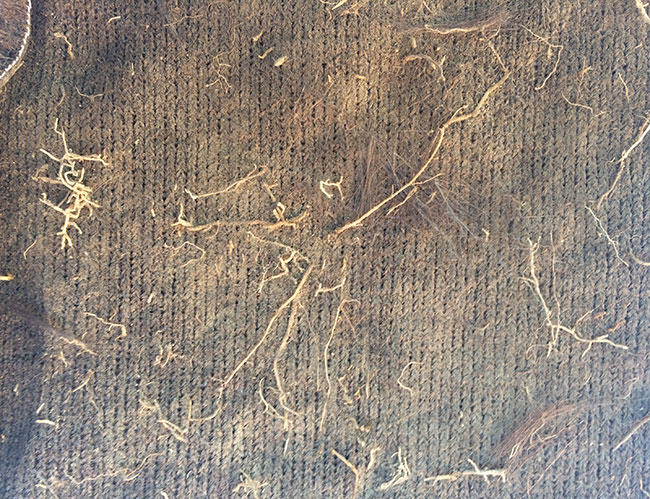
A closeup of the backing of the fake fur also shows it to be in good shape.
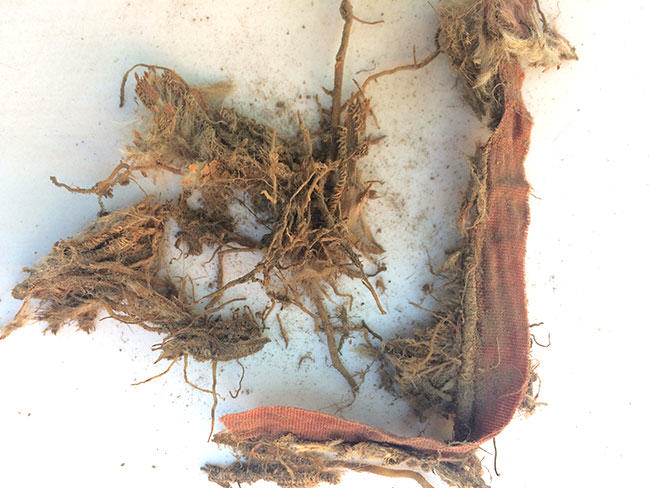
In contrast to the fake fur, the real fur is degraded to the point of being unrecognisable, and only has any integrity at all because of some binding and thread. When you look at the sample close up you can see a few hairs of fur left and some remnants of the leather, but the bulk of the sample consists of thread (cotton), the binding (either silk or synthetic) and roots. This is a very strong indicator that real fur biodegrades much faster than fake.
Summary
Equal-sized pieces of real and fake fur were buried side by side to test the common claim that real fur biodegrades while fake fur does not. After one year, the real fur is in an advanced state of degradation, with the hairs reduced to a few fine wisps, and a few shreds of leather held together by thread and backing. The fake fur, however, shows very little evidence of degradation, biological or otherwise. In fact, it is nearly intact.
As far as the real fur is concerned, we consider this experiment to be conclusive already, and a year from now, when next we exhume our samples, we fully expect to need a magnifying glass and tweezers to find any. But as far as the fake fur goes, the experiment has only just begun. Will it degrade at all, and if so, will it take five years, or until the end of time?
Read the first three installments of this experiment:
The Great Fur Burial, Part 1: Burial
The Great Fur Burial, Part 2: After Three Months
The Great Fur Burial, Part 3: After Six Months
SEE ALSO: New study compares natural and fake fur biodegradability. Conducted by Organic Waste Systems, Ghent, Belgium; commissioned by the International Fur Federation and Fur Europe, 2018.
Why We Must Renew Our Support for Sealing
by Eugene Lapointe, president, IWMC World Conservation TrustOf all conflicts between advocates of sustainable use of wildlife and advocates of animal rights, none has been more enduring…
Read More

Of all conflicts between advocates of sustainable use of wildlife and advocates of animal rights, none has been more enduring than the sealing issue. For more than 50 years, sealers have been on the front line in a war to decide how we manage our wildlife – so long, in fact, that there is a danger their supporters will lose interest. To everyone who recognises the importance of keeping this traditional harvest alive, I say, renew your support for sealing. It's needed now as much as ever.
Sealing was not always the cause célèbre of the animal rights movement. Back in the 1960s, when the anti-sealing campaign began, the prime target was whaling. Despite the little-known fact that the whaling industry had already halted the excesses of its past, animal rightists (and not a few conservationists) were determined to shut it down completely. And they nearly succeeded.
This cleared the way for the anti-sealing campaign to grab the headlines – something it has been doing ever since. Half a century on, the beleaguered sealers are still fighting, with the current battleground being the EU.
SEE ALSO: CANADA CELEBRATES ITS FIRST NATIONAL SEAL PRODUCTS DAY
What makes the sealing story so remarkable is that it has lasted this long. Most of the credit belongs to the sealers themselves – both indigenous communities of the High North, and the descendants of settlers – for their refusal to die. Thanks also must go to a handful of governments for their unflinching support.
The sealers, of course, are fighting for the future of their cultures and one of the few livelihoods available to them. Anyone who has visited the northern reaches of the world will understand why. We are struck by the natural beauty of the rugged landscape, the purity of the air, and the abundance of life in the oceans. This beauty continues to exist because people maintain traditional ways of life, and central to this is utilizing local natural resources, including seals. Fishermen and hunters tackle the seas and the ice to bring home their catch, and what they don’t consume, they sell.
This beauty continues to exist because people maintain traditional ways of life, and central to this is utilizing local natural resources, including seals.
Governments, meanwhile, have supported the sealers for a variety of reasons. They recognise their right to self-determination, they want to keep people “on the land” (not flooding into overcrowded cities), and they recognise the role played by wildlife use in ecosystem management. Because seals consume commercial fish and forage species, and sustain others such as sharks and orcas, governments are increasingly focusing their research on the impact of seals and seal harvesting on the ecosystem as a whole.
This approach reflects a need to ensure that seal populations will continue to thrive. It also ensures that we live up to a moral responsibility to understand the impacts of harvesting choices on other species. This can mean limiting seal harvesting or encouraging it, depending on particular regional circumstances.
Finding the right balance between prey and predators makes the marine ecosystem more productive and preserves its biodiversity.
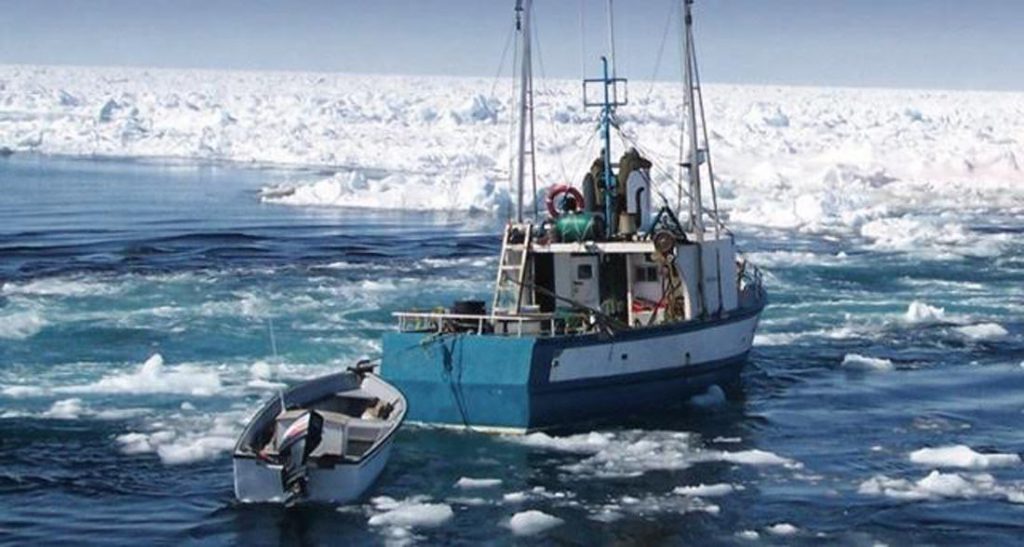
Veterinarians, too, have supported sealers by denouncing the message of animal rights groups that sealing is inhumane. The most common method for harvesting seals is using a rifle, while use of the "hakapik", a traditional harvesting tool, is increasingly rare today. Veterinarians consider both to be humane because they consistently cause instant unconsciousness before death.
The sealers have also received broad support from advocates of sustainable use with no direct interest in sealing. Croc farmers, kangaroo meat harvesters, you name it; across the globe, wildlife users have thrown their support behind the sealers. Meanwhile major conservation groups such as the IUCN and WWF have acknowledged that sealing does not pose any conservation issues.
Yet despite the perseverance of the sealers themselves and the breadth of support for sealing, all is not well in paradise. The relentless attacks from groups with seemingly inexhaustible funds have tested our support to the limit and found it wanting. Proof of this is the fact that sealers are still losing ground with the recent closure of the EU market (except for that reviled exemption for products from indigenous communities). The enormous potential US market, meanwhile, is just as far off as ever. The US has banned all marine mammal products since 1972, and no one, not even the governments of sealing nations, is willing to mount a serious challenge to this ban.
SEE ALSO: EU SEALING POLICY IS HYPOCRITICAL, ANTI-DEMOCRATIC
So to any wildife user wavering in their support for sealing, I recite the classic poem of German Lutheran pastor Martin Niemöller:
“First they came for the Socialists, and I did not speak out –
Because I was not a Socialist.
Then they came for the Trade Unionists, and I did not speak out –
Because I was not a Trade Unionist.
Then they came for the Jews, and I did not speak out –
Because I was not a Jew.
Then they came for me – and there was no one left to speak for me.”
As advocates of sustainable use, we should be enormously thankful that, against all odds, the sealers have survived the last 50 years. But we must not take their survival for granted. They are under constant threat and cannot be allowed to disappear, if for no other reason than that we may be next.
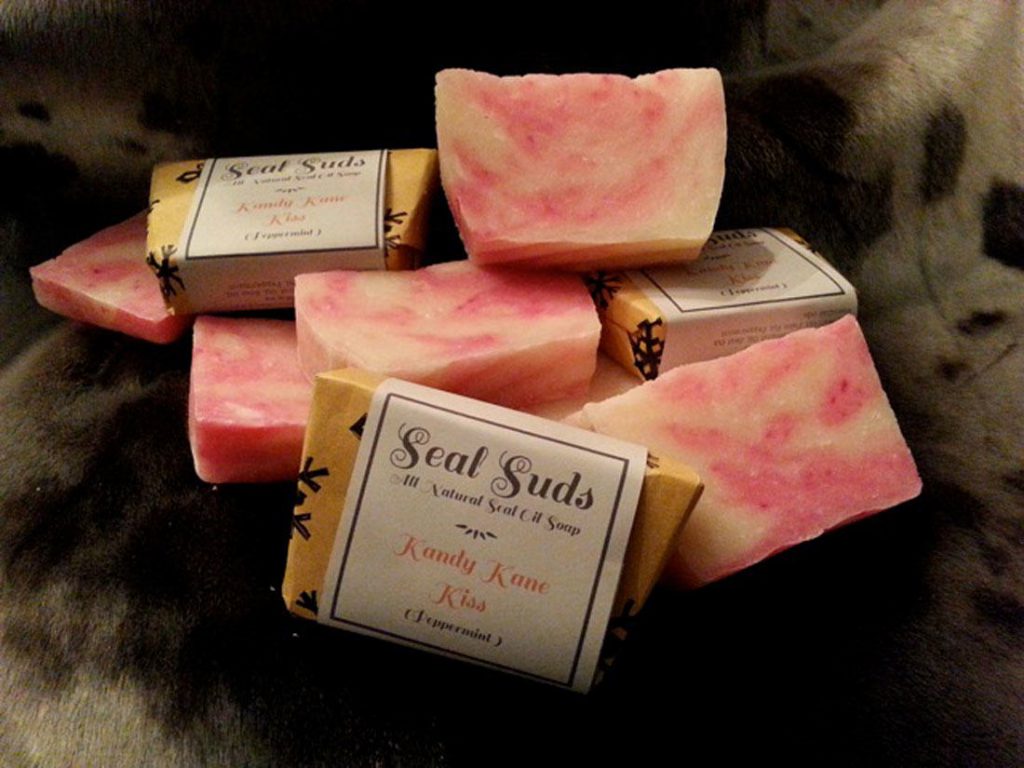
FROM OUR WEBSITE: IS IT ETHICAL TO PRODUCE, BUY OR WEAR FUR?
At a time when we, as consumers, are being urged to “care for our planet” and make environmentally-responsible choices, we…
Read More
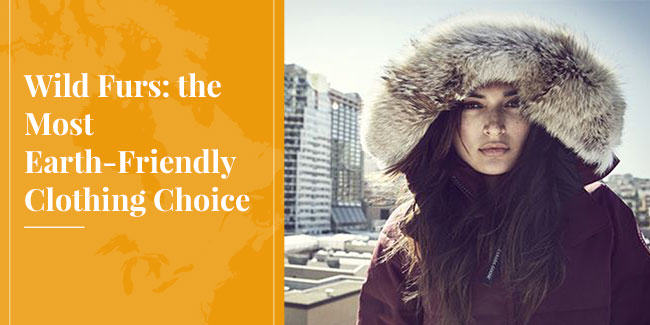
At a time when we, as consumers, are being urged to “care for our planet” and make environmentally-responsible choices, we should take a closer look at wild furs. And the closer we look, the more impressive are the environmental benefits we see. While all the furs we use today are eco-logical, wild furs are to clothing what “organic”, “free-range”, and “100-mile-diet” are to dinner.
Here are 5 top reasons why wild furs are an excellent choice for anyone who wants to adopt a “greener” life-style:
1. Like all fur, wild-sourced pelts provide a naturally warm, lightweight, durable, and ultimately biodegradable clothing material. After all, fur evolved over millions of years to become one of the most effective insulators we know. And, of course, fur is also remarkably soft, comfortable and beautiful!
2. The wild furs we use today come from abundant populations, never from endangered species. Trapping is strictly controlled by state and provincial governments to ensure that we take only part of the surplus produced by nature. Most species produce more young each year than their habitat can support to maturity. We can use part of that “surplus” without depleting the population. In financial terms, it’s like living on the “interest” that nature provides, without depleting our “capital”. This is known to environmentalists as “the sustainable use of renewable natural resources”, a key conservation principle promoted by the International Union for Conservation of Nature (IUCN) and other conservation authorities.
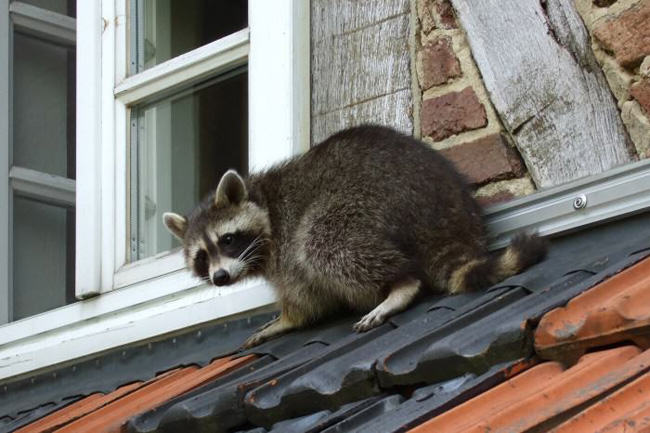
3. The populations of many furbearing species would have to be controlled even if we did not use the fur. Overpopulated beavers flood roads, fields, and forest habitat. Raccoon, coyote and fox populations must be controlled to protect sea turtle eggs, ground-nesting birds and other vulnerable or endangered species. Rapidly expanding coyote populations are also the number-one predator threat for sheep and cattle ranchers. Raccoons, foxes and skunks can carry rabies and other dangerous diseases into urban areas. When animals must be culled to protect property, to prevent the spread of disease, or for any other reason, it is more respectful to use them. Furthermore, without a market for fur, these management efforts would have to be financed by tax-payers.
SEE ALSO: WILDLIFE CONTROL EXPERT OR TRAPPER? WHO YOU GONNA CALL?
4. More than 35 years of scientific research and trap testing ensure that the most humane possible methods are used to capture furbearing animals. In fact, government-regulated trapping now often helps to reduce suffering, by maintaining healthier and more stable populations of wildlife than would occur naturally. If humaneness is a concern, modern trapping techniques are generally preferable to disease, starvation, and the “boom-and-bust” cycles that are nature’s ways of pruning back overpopulated beavers, muskrats, and other species. While farm-raised fur animals receive excellent care, some people feel more comfortable knowing that the animals we use live freely in their natural state until the moment when they are captured. In this sense, wild fur is the ultimate “free-range” clothing material.
5. Many furbearing animals also provide food for aboriginal and other trappers and their families. Beavers and muskrats are important food sources for the Cree people of northern Canada. Raccoons, opossums, and other species are also eaten in many parts of North America. Animals that are not eaten by trappers and their families are returned to the bush where they feed mice, birds and other animals through the winter, when food is in short supply. Nothing is wasted.
Wild fur also provides important income for aboriginal and other people living in rural or remote regions where employment opportunities may be limited. Not least important: the income from wild fur depends upon maintaining natural habitat, and thus provides an incentive for maintaining wilderness areas. One of the unintended consequences of anti-fur campaigning is that, by eliminating markets (for sealskins, for example), they force aboriginal communities in northern Canada to open their territories to more oil and gas exploration, mining and other activities that can seriously disrupt wildlife and their habitat. In fact, trappers in many regions are working with government and industry to minimize the negative impacts of logging and other resource exploitation. For example, they lobby to maintain corridors and buffer zones of uncut timber around lakes and streams that wildlife depend upon, and they identify the nesting areas of eagles and other sensitive species so they can be protected. We all care about nature, but trappers are our eyes and ears on the land – the people who can sound the alarm when nature is threatened.
As this brief summary shows, wild fur is an excellent choice for anyone who cares about nature. Ironically, the “faux fur” and other synthetic textiles promoted by many “animal-rights” activists are usually made from petroleum, a non-renewable resource. But because most people – and most media – are now in big cities, the trappers’ story is rarely heard.
Standing Up to Anti-Hunting Bullies – A Case Study from Ontario
by Gregory Thompson, natural resource managerIt seems that animal rights and anti-hunting bullies come in many shapes and forms. Knowing this is important in managing-down…
Read More
It seems that animal rights and anti-hunting bullies come in many shapes and forms. Knowing this is important in managing-down the inevitable, but thankfully infrequent, conflicts that lawful hunters, trappers and even fishermen face in harvesting wildlife. A couple of years ago, while hunting wild turkey, I had two such encounters on the same day. Here is what happened.
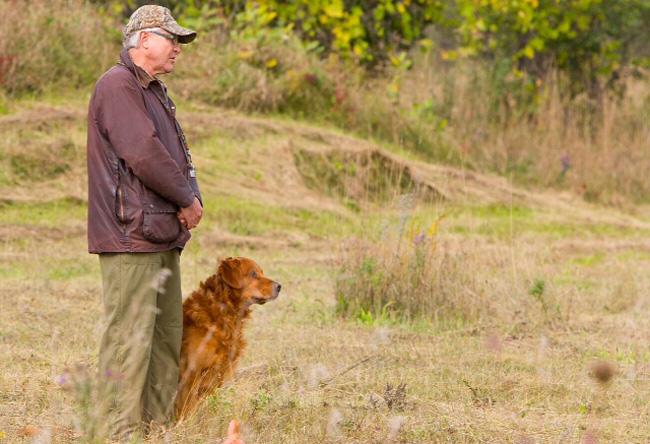
The spring turkey season was open and I was hunting on private property in eastern Ontario. The property consisted of a long rectangular field bordered by forest and bush on the north side, a township road and small property with a house and barn on the west side, fields on the east side and an unimproved township right-of-way on the southern edge. Turkeys were frequently feeding on waste corn along the northern edge of the property, and the adult males, or toms, were using a nearby rise in the field as a strutting zone. Only bearded turkeys are legal game during the spring season.
On the day in question, I parked my truck along the edge of the right-of-way, packed up my gun and gear, and walked in a northeastward direction across the field. Following the hunting regulations, proper gun handling and shooting in a safe direction are key to personal safety and that of others. As required by law I was using a shotgun to hunt turkeys. These firearms typically have an effective range of no more than 60 yards, though the spent shot can travel up to 200 yards. With the surrounding private property and the township right-of-way well beyond my field of fire, I set up my decoys on the small rise in the field and settled into the nearby fencerow for the afternoon. I had a clear view of the entire field. The right-of-way was well over 500 yards to the south. Beyond my truck, which was one-half a mile southwest, I could barely make out the roof tops of some of the housing and other buildings along the higher elevation of the township road.
By then it was nearly 2 p.m. I planned on staying until the end of the day’s hunt which, according to the provincial regulations, is 7 p.m. After three uneventful hours, I was surprised to see a provincial police cruiser driving down the right-of-way. At the same time I watched as a large bearded turkey ran as fast as he could across the corn field, headed for the safety of the nearby forest. The police were obviously responding to some sort of complaint. The cruiser parked behind my truck, blocking the right-of-way.
Through my field glasses, I watched as two officers inspected my vehicle, returned to their cruiser, and then sat there waiting. At that point I concluded, reluctantly, that my hunt for the day was probably over. However, as subsequent events were to prove, the day’s excitement was just about to begin.
"How Is Your Day Going?"
Approaching the officers with a shotgun in-hand, even unloaded and with the action open, would complicate our encounter. So I unloaded my gun, set it aside in the fencerow along with my other gear, and walked back down the field. As I approached the vehicles, both officers got out of their cruiser to meet me.
“How is your day going Mr. Thompson?” the senior officer asked. I had presumed, correctly, that they had checked my vehicle registration in order to identify its owner. “Well frankly sir it was going fine until you two showed up. So far today my only opportunity to bag a tom turkey just ran off into the woods at the approach of your vehicle,” I replied.
Both officers remarked that, when they started down the right-of-way, they had seen a large turkey. From my camo clothing they had already surmised that I was hunting. I explained to them that I was licenced, that the spring turkey hunting season was open, and that I was hunting on private property with the permission of the landowner. I added that I was parked on the edge of a public right-of -way. Further, I offered to provide the officers with the landowner’s name and phone number, along with my permits and licences, to which they declined.
I then immediately started asking them, “What are you doing here? Are there any problems?”
The senior officer answered in a serious tone, “Sir we just received an urgent call from a property owner on the nearby township road reporting multiple gunshots and bullets hitting their house!”
After I stopped laughing, my reaction was swift. “This is ridiculous. These allegations are not true. I have not even fired a shot. Not only that, but I am hunting well down the field away from buildings on the township road with a safe field of fire in all directions. And, like I said, I have the permission of the landowner.”
Without any hesitation I continued, “It is really unfortunate that you have to waste your valuable time on a frivolous complaint such as this. Understand that whoever had complained has brought you here under false pretenses in order to harass me. Whether their motivations are animal rights, anti-gun, or anti-hunting, it does not really matter. It is illegal under Ontario’s Fish and Wildlife Conservation Act to interfere with anyone who is engaged in lawful hunting, trapping or fishing.”
The officers agreed with my assessment and concluded that the complaint about gunfire was entirely unfounded. We shook hands and after wishing me a good hunt, they departed. I then walked back to the fencerow to retrieve my gear and head home, but not having any inkling as to what was going to happen next.
"Leave Immediately!"
I was returning across the fields to my truck when I noticed a man driving an ATV down the right-of-way. He stopped at my truck, got off his vehicle, and placed something on my windshield. He then continued along the right-of-way until deep mud forced him to turn back. By that time I had reached my truck. A note was stuffed under my windshield wiper. On it was written, “You are parked on private property! If you do not leave immediately the police will be called and you will be charged with trespassing!”
I met the fellow as he returned and motioned him to stop. Scowling, he killed the engine and stepped off his vehicle.
“Is this note yours?” I asked politely.
He stepped menacingly towards me, shouting, “If you don’t leave right now I will call the police and have you arrested for trespassing and poaching!”
"You are too late. Unfortunately for you the police just left," I blurted out. “Respectfully sir, you do not know what you are talking about. I am not trespassing nor am I poaching. Spring turkey season is open and I have the permits and licences that allow me to hunt. There is nothing illegal with parking on the edge of this public right-of-way, nor with my hunting on this field. I have the landowner’s permission."
It took him quite a while to calm down, but not before he complained at length about trespass and littering problems on his nearby property. I told him that I too was a landowner and that I sympathized with him. I then took the initiative to explain that I have been hunting for over 50 years, that I am very safe in the field, and that I never trespass nor litter. I also described for him briefly the role of regulated hunting in managing for abundant game and other wildlife species.
"I will be hunting here again," I told him. "So when you next see my vehicle parked here you will know who it is. You will also know that I am hunting with permission and you can count on me to hunt safely, not trespass on your property, nor litter. Here is my business card. Call me if you have any questions or concerns." I concluded our encounter by asking him if he had any other issues. He demurred and said that he did not. We amicably shook hands and I thanked him for stopping.
SEE ALSO: STANDING UP TO ANIMAL-RIGHTS BULLIES - CASE STUDY #1
Later I reflected on the afternoon’s events. In one day I had been falsely accused of trespassing, illegal parking, poaching and careless use of firearms. While my hunt that day did not turn out as expected, my preparations certainly made a big difference in being able to successfully resolve the day's two encounters. Obtaining landowner permission, confirming vehicle parking, setting up in a safe shooting location, and having your documents at hand, are all part of what it takes to successfully hunt on private lands and, as it turned out, to deal with harassment by others attempting to interfere with your lawful activities.
I returned to that same field later in the spring. Without any further incident, I was fortunate to harvest a nice tom turkey. Having previously run the gauntlet of police and angry neighbors, I can assure you that I savoured every morsel of that delicious and hard-earned bird!
The Great Fur Burial, Part 3: After Six Months
by Truth About Fur, voice of the North American fur tradeThe fur industry is proud of the many ways in which fur is eco-friendly, including that after decades of use, it biodegrades. In…
Read More
The fur industry is proud of the many ways in which fur is eco-friendly, including that after decades of use, it biodegrades. In contrast, when fake fur made from petrochemicals reaches the end of its useful, and typically very short, life, it goes in a landfill where it will sit until the end of time. Or will it? In pursuit of knowledge and truth, we decided to do a little experiment: the Great Fur Burial.
On May 14, we took a mink stole and a fake fur vest, cut them into equal-sized pieces, and buried them. Above is how the pieces looked on burial day. The plan was that after 3 months, 6 months, and then once a year for five years, we would unearth two pieces of the mink and fake fur to compare degradation rates. This experiment is hardly scientific, but it only has to show one thing: do they rot, or not?
Six Months Later ...
Two weeks ago we unearthed another set of fur pieces. Our burial spot is marked by red sticks.
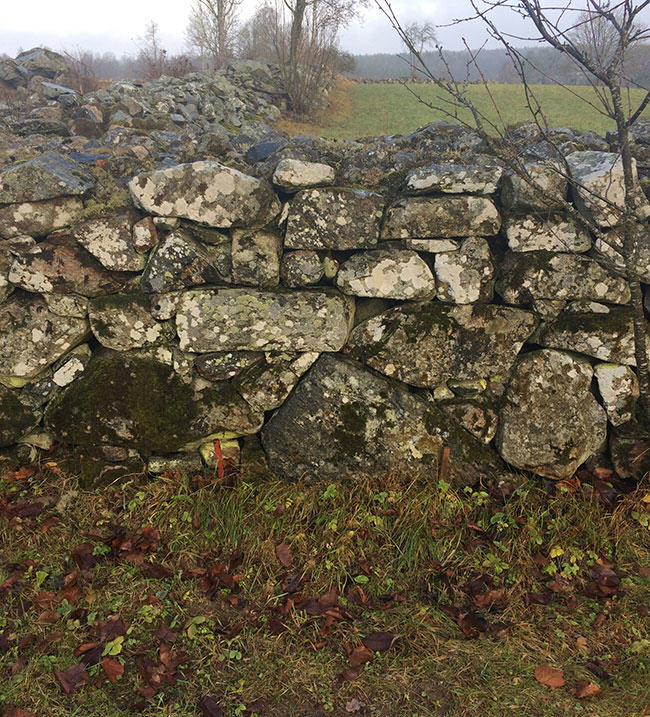
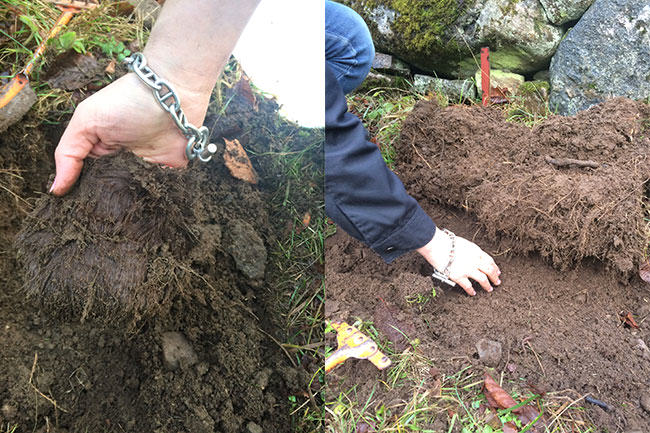
The synthetic fur was easy to find (left), whereas we had to be a lot more careful unearthing the real fur (right) as the pieces appeared to be much more delicate.
Once the fur pieces were out of the ground, they were placed, as is, on a tray. The real fur piece is on the left and the fake fur is on the right. As you can see, the real fur sample is much smaller than the fake sample, and not because of degradation. It seems the real fur sample must have been made of two pieces sewn together. The stitching rotted, and we ended up exhuming only one half.
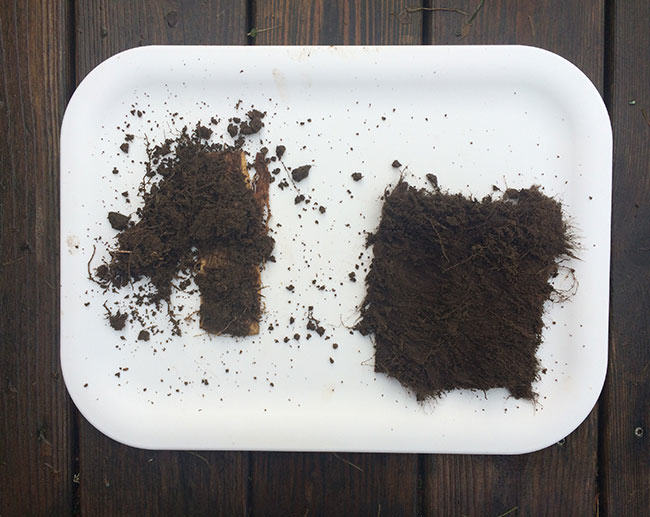
We gently shook some dirt off each piece but as the mud was really encrusted in the fur, we decided to let the samples dry for two weeks so we could clean them without causing damage.
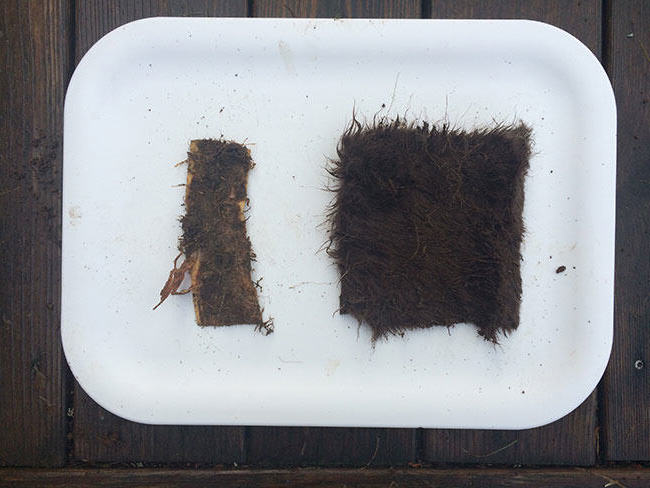
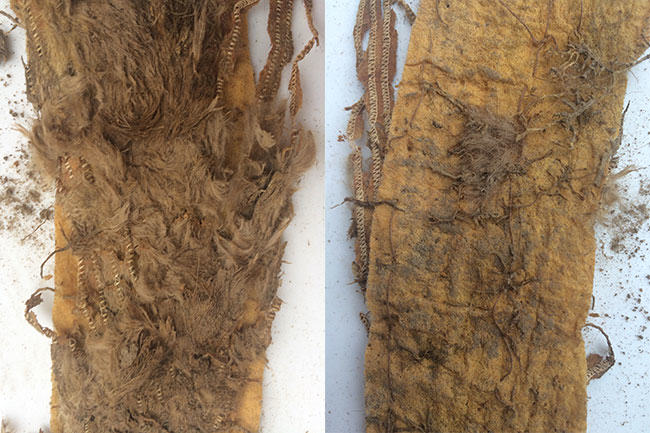
Two weeks later the dirt was dry and we gently shook off as much of it as possible, without having to rub the samples too much. It is quite obvious, looking at the photo below, that the real fur (left) has disintegrated a lot more than the synthetic. The synthetic fur (right) looks pretty much intact, whereas the majority of the hairs of the real fur seem to have disappeared. The leather is frail and the only parts of the real fur sample that seem to be in decent condition are the threads.
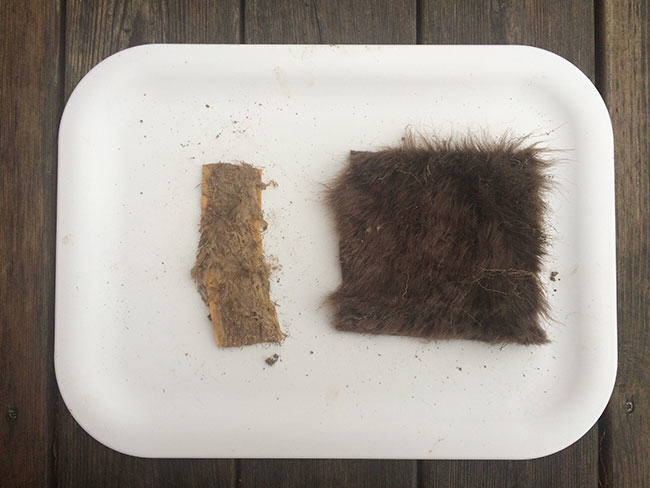
This photo shows the backs of the samples, and it is obvious that the real fur is in much worse condition than the synthetic fur.
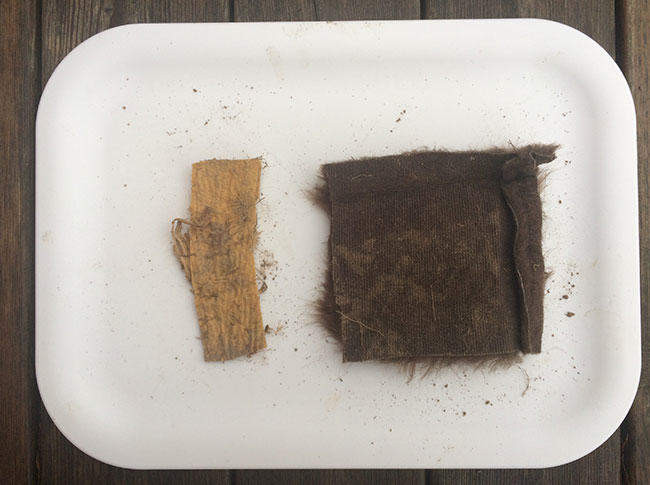
Let's look at the real fur, close up. The hairs are practically gone and the leather is frail. The sample is disintegrating.
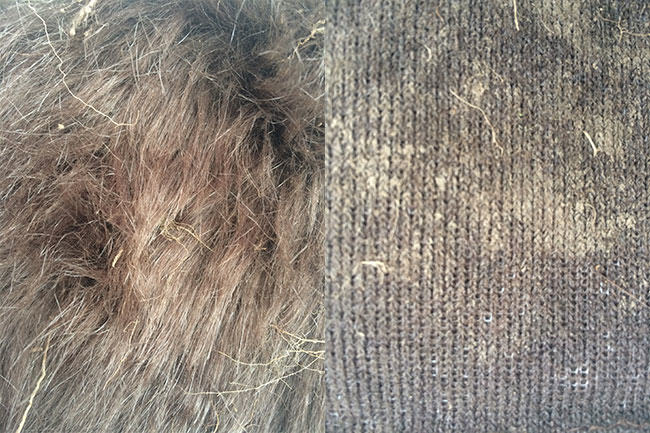
In contrast, the synthetic fur, below, still looks practically intact. The hairs are still soft and the backing shows very little change since it was buried. It is hard to imagine any dramatic change happening between now and our next exhumation a year from now, so it's looking like the story is true: fake fur can sit in a landfill for hundreds of years.
Summary
Equal-sized pieces of real and fake fur were buried side by side. After six months, the fake fur showed no obvious signs of degradation, biological or otherwise. In other words, it was almost perfectly intact. The real fur, however, was in an advanced state of degradation, with the hairs reduced to a few fine wisps, and the leather frail and delicate.
Like all good scientists, we’ll hold back on making conclusions until the experiment has run its course. But the way things are headed, it might not be long before we’re using tweezers and a magnifying glass to find a real fur sample. It will all then be down to the fake fur samples. Will they degrade in five years? Or by the end of time?
Read the other installments of this experiment:
The Great Fur Burial, Part 1: Burial
The Great Fur Burial, Part 2: After Three Months
The Great Fur Burial, Part 4: After One Year
SEE ALSO: New study compares natural and fake fur biodegradability. Conducted by Organic Waste Systems, Ghent, Belgium; commissioned by the International Fur Federation and Fur Europe, 2018.
Sportsmen Must Unite to Protect All Hunting, Fishing, Trapping
by Jeff Traynor, trapper and editor, Furbearer ConservationI recently sat in on a conservation meeting in a sportsmen’s lodge outside Concord, New Hampshire. The topic for discussion…
Read More
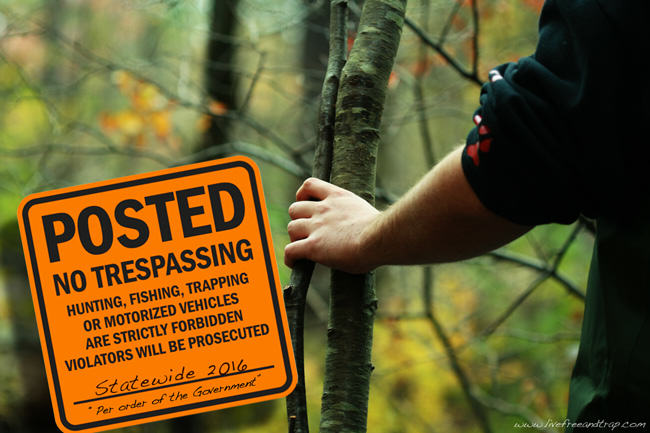
I recently sat in on a conservation meeting in a sportsmen’s lodge outside Concord, New Hampshire. The topic for discussion was the lack of camaraderie amongst sportsmen and women, and the toll this has taken on conservation and wildlife programs throughout the state and region. One man said his piece on what was wrong with the current state of hunting and trapping across America. “I’m going to say something that may offend some of you," he cautioned us, "but it needs to be said. Sportsmen groups are one of the most unorganized groups of people in the country.” There wasn’t a single rebuttal from anyone in attendance; everyone knew full well what he meant, and furthermore, what it means for the future of consumptive outdoor activities in the region and the country.
It’s a subject that not too many hunters and anglers recognize, or want to admit, but those of us in more “niche” activities like hound hunting and fur trapping know it all too well. Let’s face it, you may be a big-time duck hunter and passionate about your sport, but when a bill comes before your state legislature to restrict or ban bear hunting, are you as a duck hunter, going to take the time to write to your representative to save bear hunting when you know full well you’ll never hunt bear? I’m guessing the answer, nine times out of ten, would be “no”, and that's one of the reasons why consumptive outdoorsmen and women are constantly under scrutiny from anti-hunting and anti-consumptive organizations nationwide.
Decades ago this type of mindset was unheard of. If you hunted deer, chances were you also dropped a line in the creek for trout and trapped muskrats along the marshlands during duck season. In many states and provinces, this way of life still prevails as larger populations of rural folks hold tight to their outdoor self-reliant roots. But for many of us, the community of consumptive sportsmen has become fragmented. We are passionate about our own particular practices, but fail to recognize hunting, fishing and trapping as an all-encompassing benefit to conservation and outdoor recreation.
Divisions in the Ranks
Now I know there are plenty of you reading this and wondering what I’m talking about, thinking that it's only common sense to support all forms of hunting, trapping and angling. Unfortunately nowadays, your train of thought is in the minority, and this concept is seldom heard when the proverbial deer piss hits the fan.
Yes, we should support and commend one another for having the common sense to want this natural world managed and regulated as a resource for all consumptive practices. However, every state and province in North America has divisions within its hunting ranks. Many bird hunters don’t care for trappers; many deer hunters don’t care for hounds-men; many anglers don’t care for hunters. These divisions rise to the surface every fall, and sometimes disputes over wildlife management spill into clubs and departments, causing greater divides and offshoots.
When a bill or piece of legislation does come along threatening the current ways of hunting and trapping, it's usually only those whose hides get affected (pun intended) that spend time voicing opposition.
Meanwhile, the animal rights groups and “hands-off" environmentalists have a field day presenting themselves as the majority, when in reality this is clearly not the case.
Join Your Sportsmen's Group
So what exactly am I asking for? Am I seriously trying to convince every New Hampshire deer and pheasant hunter to show up at the next hearing on anti-trapping legislation? Well, frankly, in a perfect world that’s what I’d like to see, and I recall a time when that would not have been an outlandish request.
What I will realistically settle for is for all of you to join your local sportsmen’s group - not your local skeet club or shooting range, but your state organization dedicated to preserving hunting, fishing, and trapping for everyone. The Sportsmen’s Alliance for instance, is a national organization that champions such values. This group serves as a lookout to protect deer hunters and bass fishermen, as well as fur trappers, hound hunters, and turkey callers. While national groups like the Sportsmen's Alliance do an excellent job, we must also support one another at the state and regional levels. Almost every state and province has some kind of consumptive sportsmen’s group; Maine has SAM, New Hampshire has the NH Wildlife Federation, and so on from Vermont to California. These groups not only support all major forms of regulated hunting and fishing, but also serve as a bridge of unity between the different classes of these outdoor activities.
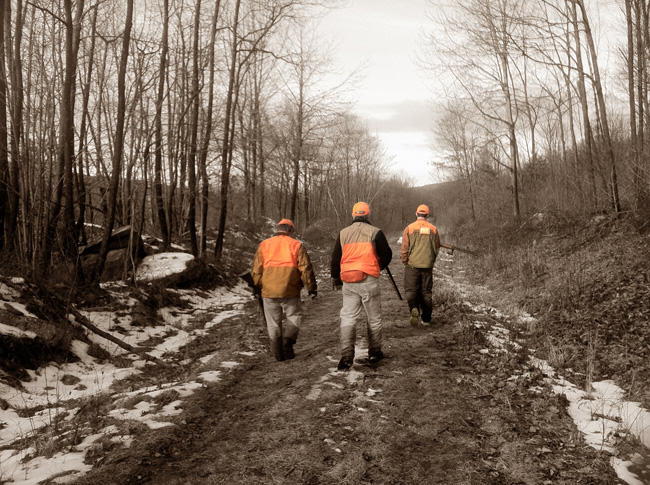
When each of you took your hunting or trapping education classes, you learned about concepts like carrying capacity, wildlife management and conservation. I can tell you the Primos hunting decal on the back of your F-250 doesn’t mean a thing if you don’t support the other aspects of conservation that go along with its meaning. It really doesn’t matter how much you spent on your duck blind, or which Pro-Staff you belong to - if you aren’t willing to recognize and support the other aspects of wildlife conservation, such as fur trapping and bear hunting, your Real-Tree camo pajamas are nothing more than a fashion statement. More than 90 million U.S. residents (16 years old and above) participated in some form of wildlife-related recreation in 2011. With numbers like this, it’s a downright embarrassment that we must constantly fight to keep trapping and hunting relevant today.
Deceitful Anti-Hunting Groups
Despite what anti-hunting activists may say or think, I know lack of support for these “niche” activities isn’t due to lack of individual sympathy for the cause, but rather a lack of motivation to see the fight through. This is where we all, as outdoorsmen and women, must stand together against those who wish to abolish all forms of hunting and fishing. If you don’t believe your brand of outdoor hunting could be targeted, take a look at the current headlines to get a snapshot of how anti-hunting groups deceitfully operate. They know how difficult it is to push a man off his stool. They know it's much easier to whittle away at each supporting leg of that stool when he’s not looking, and watch him fall on his ass in sheer shock and surprise!
Keep in mind these organizations don’t protest hunting and attempt law changes on principle. Their primary motivation is donations. Take a look at any of the anti-hunting groups like HSUS, PETA and Furbearer Defenders, and you’ll see their websites plastered with “donate-now” buttons. They parade state-to-state crying injustice, corruption and animal cruelty while soliciting for donations. Once the deed is done, and they’ve won the argument, they’re on to the next state to suck the life out of their outdoor conservation groups. The wildlife these groups claim to support end up suffering in their wake as they continue to follow the money. Its common knowledge that most of the people who speak against hunting at these state hearings are paid to be there – it’s much more motivating to “save the animals” when you’re collecting a large paycheck in the process. But instead of standing and fighting these anti-hunting groups, sportsmen are busy pushing their neighbors under the bus in the hope these groups will move on if trapping and bear hunting are banned. This is a huge mistake, as even the most basic research on these groups will show this is not their end game. Staten Island is already experimenting with controlling its deer population by castrating bucks rather than allowing hunting; it’s happening right in front of your eyes and I’m sorry to say the “Redneck pride” sticker on the back of your truck isn’t going to stop it.
It’s not all doom and gloom; there is a light at the end of this ever-growing tunnel. You can start by becoming an active member of your local sportsmen’s club and keeping an ear to the wall for anti-hunting and trapping legislation. Find out who your local district and state representatives are and let them know you are a hunter or trapper. Whether they’re Democrat or Republican, conservative or liberal, most representatives listen to what their constituents are saying. Sending a handwritten letter introducing yourself and your outdoor activities is a good start to breaking the ice before legislation is introduced. It doesn’t take a lot of time either - I work a full time job, maintain and run a pro-trapping website for free, and take an active role in my local conservation groups with time still left over to hunt and trap!
To summarize, whether you hunt to put venison in the freezer, fish for sport, bird hunt with dogs or set traps for natural fur garments, you are an integral part of the North American Model of Wildlife Conservation. Your support is needed as our society is overcome by tablets, smart-phones, self-driving cars and Kardashians. Our self-reliant ways of life are ALL in jeopardy as habitat loss and out-of-touch citizens continue to constrain and restrict our activities. It’s time we start pushing back and regain our freedoms as fixtures of the natural world. United We Stand, Divided We All Fall.
FOLLOW JEFF TRAYNOR'S "LIVE FREE AND TRAP" ON:
5 Reasons Why We Must Wear Leather and Fur
by Truth About Fur, voice of the North American fur tradeThe world is changing and, with it, our approach to consumption. As the impact of global warming worsens, many consumers…
Read More
The world is changing and, with it, our approach to consumption. As the impact of global warming worsens, many consumers are rethinking what they buy, and how much of it. "Local", "organic" and "minimalism" are all buzzwords many of us are drawn to, and some people question the need to eat animals, or wear leather and fur. Where does that leave us with animal use?
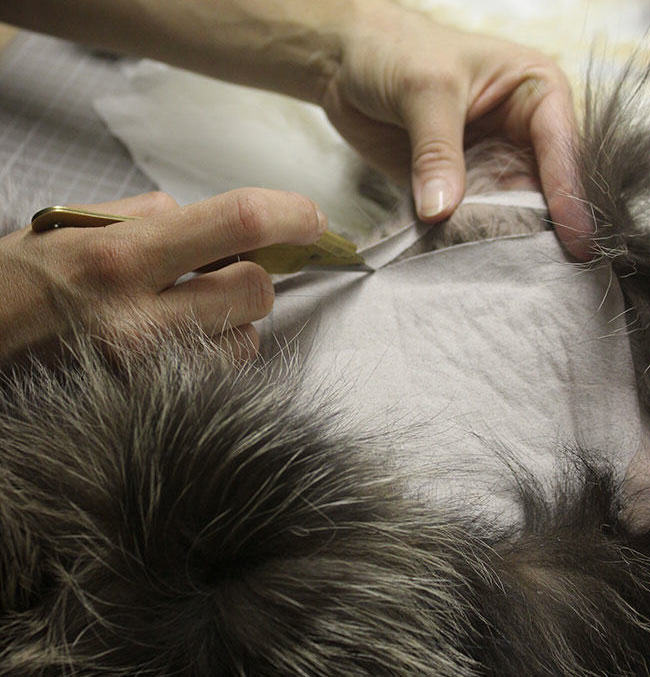
The use of animals is an ethical dilemma that many people question, but most people agree that if animals are well-treated, they are not in danger of becoming extinct, none of the animal is wasted, and the animal is put to good use, then it is acceptable for us to use and consume them.
SEE ALSO: WHY FUR IS THE ETHICAL CLOTHING CHOICE
Animal use is an integral part of many people’s lives, and is linked to essential products in our everyday life, such as medication, food, and clothing. Animals are used in medical testing in order to find cures to life-threatening diseases. We eat animals and while some people question the need to do this, there is plenty of evidence it can be done without harm to our planet. In fact, lots of land is better suited for pasture than for cultivation. And remember that animal manure is used to replenish the soil to grow crops. But if we are concerned about possible impacts, a small reduction in the amount of meat we consume – and waste – can go a long way. And lastly, we wear many types of animal products in order to protect ourselves from the elements. Fashion may not be essential, but clothing is. The need to keep warm in cold weather is a matter of life and death.
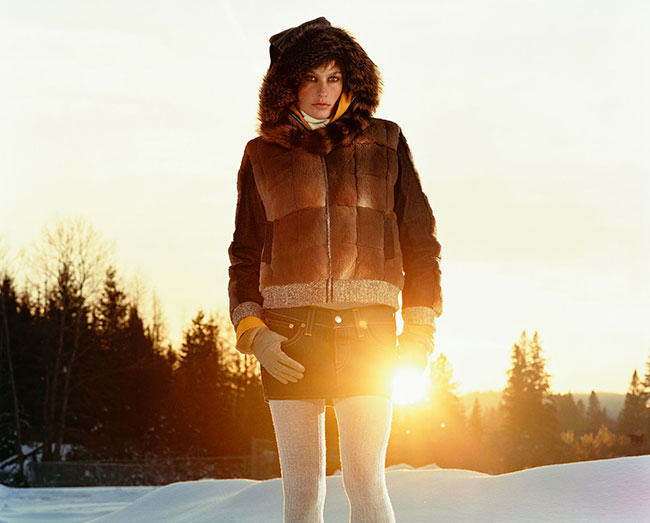
If you live in a cold country, you’ll need clothing that can protect you from the elements, and your choices should involve leather, fur, and other animal products. Why? Because there are no viable alternatives.
If we really care about the environment (and we all should because nothing else matters if we don't have water and food and clean air), we will want to buy sustainable fashion products that use production processes that are not too harmful to the environment, that are long-lasting, and that are biodegradable. That is exactly what animal skins are. Yes, they aren’t perfect; leathers and furs use chemicals in their processing and finishing (like all other textiles), and sometimes the farming has an environmental impact. But when you consider how long a good fur coat or high-quality leather bag lasts, you’ll realize that the environmental damage is minimal compared to the lifespan of the item.
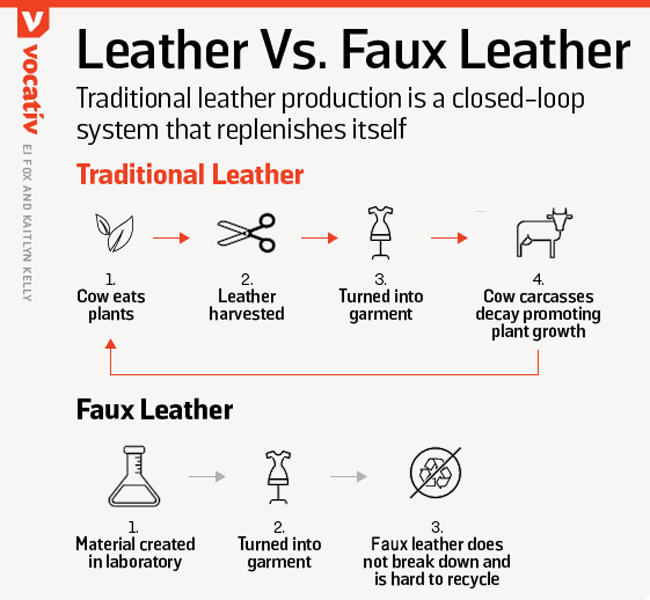
So here they are, the five reasons why we must all wear leather and fur, and these reasons all point to the fact that there are simply no viable alternatives.
1. There are no alternatives that are biodegradable. The synthetic alternatives to fur and leather take much longer to biodegrade (50 years for treated leather vs. 500+ years for pleather), and even when they have “biodegraded”, there are still remains of the plastic particles in the soil, which we are now finding in our oceans and inside fish. Truth About Fur is in the process of conducting an experiment to prove that real fur biodegrades much faster than “faux”, and the results are more dramatic than even we expected.
2. There are no alternatives that are sustainable. Synthetics are made from petroleum by-products. You probably know that petroleum is not a renewable resource. The problems caused by the extraction and transport of petroleum are only a part of the issue, let’s not get started on the political issues (read: wars) that are caused by petroleum. Animals are a renewable, sustainable resource. (Actually, wool, down, and cashmere and other similar materials are sustainable, so these are certainly viable alternatives when it comes to winter coats. But the animal rights activists are against those, too, since they come from animals. Usually a sensible winter wardrobe would combine fur, leather, down, wool, and cashmere – you’ll never be cold.)
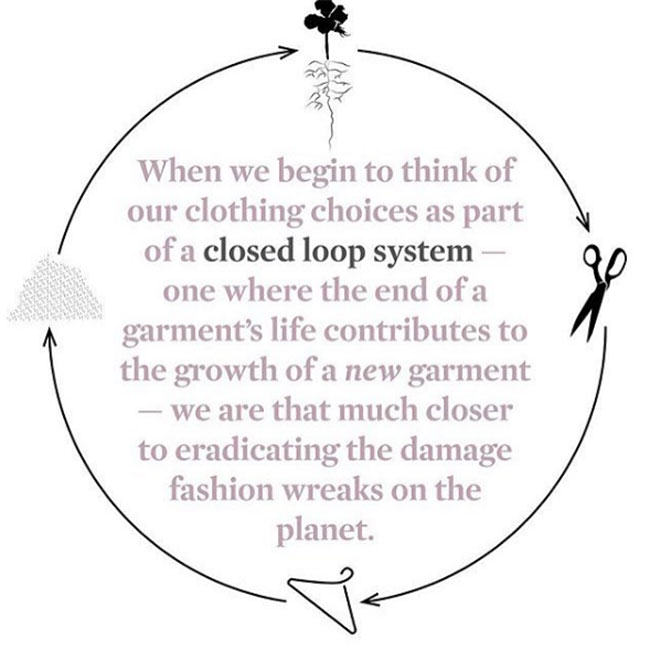
3. There are no alternatives that are as long-lasting. While a fake fur or leather jacket may be sitting in a landfill for a few hundred years longer than its real counterpart, that doesn't mean it is longer lasting in a fashion perspective. When well cared for, fur and leather items can last for decades, but fake leather and fur hardly do the same. Both look worn out much faster (and not in a cool way – like worn out leather), and they also don't maintain their warmth or waterproof qualities. You don’t find many fake leather bags being handed down from one generation to the next, do you?
4. There are no alternatives that are as environment-friendly. The points above do a good job of making this argument, but we can add to this by talking about the processing. Yes, leather and fur require chemicals for processing (leather requiring more than fur as you need to remove the hairs from leather, whereas with fur you are aiming to protect them). But two important things to consider here are that (1) the chemicals used to “dress” furs are really quite benign, e.g., alum salts (which are sold in the pharmacy to add to your bath water for sore muscles), and (2), the longevity of leather and fur items means that the chemicals per wear are much less than a synthetic alternative. Your leather bag or fur coat may have used chemicals in its production, but the fact that it lasts you 30 years makes it a more environment-friendly option than the synthetic version, made from a non-renewable resource that requires chemicals in its processing, which then looks tatty after two seasons. Another important thing to consider is that no synthetic material looks good in its natural state, while fur is frequently used in its natural state (meaning its natural colours), reducing the need for bleaches and dyes.
5. There are no alternatives that are as safe. We’ve yet to fully understand the bodily harm coming from wearing synthetics, but there’s a great deal of research that shows that synthetic materials may contribute to health issues such as infertility, respiratory diseases, and cancer. Why take the risk when there are natural alternatives?
If you truly care about the planet and its inhabitants, you’ll make consumption decisions based on what’s best for us all. You might refuse to eat animals or watch them being used as entertainment, but it is impossible to deny that synthetic clothing is causing irreparable harm to our planet. Choose materials that are sustainable, long-lasting, and biodegradable. Choose fur and leather because there are no viable alternatives.
***
To learn more about donating to Truth About Fur, click here.
Born Free USA Campaign Misrepresents Trapping
by Alan Herscovici, Senior Researcher, Truth About FurA recent on-line, anti-trapping rant by Born Free USA boss Adam Roberts (“What kind of person still traps wild animals?”, Huffington Post,…
Read More
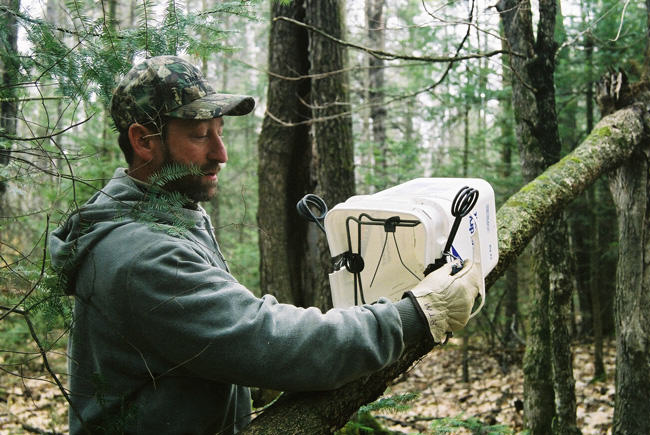
A recent on-line, anti-trapping rant by Born Free USA boss Adam Roberts ("What kind of person still traps wild animals?", Huffington Post, Sept. 7, 2016) underscores how trappers are on the front line in the war against humans using animals – a war in which the weapons of choice are misleading images, inflammatory rhetoric, and exploiting the information gap between rural and urban cultures.
Roberts' attack drives home how important it is to explain, again and again, the vital role trappers play in responsible wildlife management and conservation.
Like other "animal-rights" groups, the folks at Born Free rage against a wide range of animal-use activities. This time, as part of their "Victims of Vanity 2" campaign, they are promoting an “undercover” trap-line video showing “atrocities” that they claim “occur regularly across America”.
“What kind of person purposely destroys a beaver dam and sets a ‘wall of death’ of Conibear traps," asks Roberts, "knowing that the unsuspecting beavers will return to repair their handiwork – only to be possibly smashed across their abdomens and drowned?”
The insinuation is that such traps cause terrible suffering. Born Free's own video, however, shows beavers that have clearly been struck by the trap bar across the back of the neck, breaking cervical vertebrae and causing rapid death, just as this quick-killing trap is intended to do. These traps were developed through several decades of (on-going) scientific research to provide the most humane possible methods for controlling wildlife populations.
North America’s world-leading humane-trap research program has provided the scientific basis for comprehensive state and provincial trapping regulations, trapper-training programs, ISO standards, Best Management Practices, and the Agreement on International Humane Trapping Standards.
SEE ALSO: Neil Jotham: A life dedicated to humane trapping
Thanks to this pioneering work, the time-to-death produced by quick-killing traps like those shown in Born Free's video is now measured in seconds. Roberts knows, however, that most of his readers live in cities and have little real contact with nature. People who find their meat neatly wrapped in cellophane on grocery store counters are easily shocked by pictures of dead animals, no matter how humanely they were euthanized – especially when cued with sufficiently emotional rhetoric.
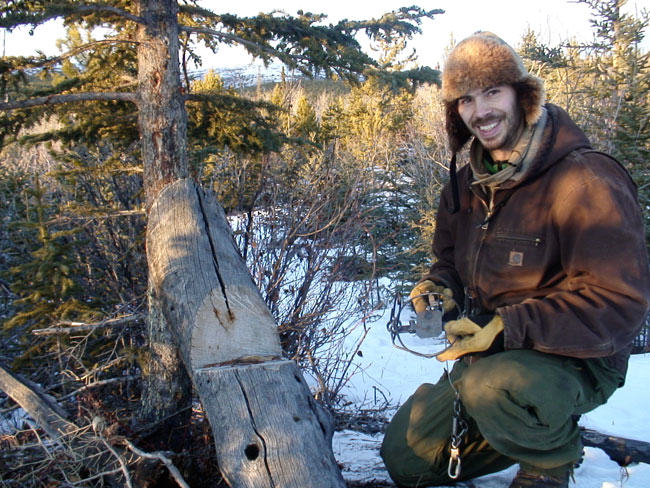
Similarly, the live-holding devices used for capturing larger predators – like the coyote shown in Born Free's video – are not diabolical instruments of “torture”. Modern, live-holding foot traps are used by wildlife biologists to capture and release – unharmed – wolves, lynx, river otters and other animals for radio-collaring or reintroduction into regions where they were previously extirpated. To claim, as Roberts does, that such traps “have remained relatively unchanged for 400 years” is nonsense.
Should We Kill At All?
But what about the bigger question Roberts implicitly raises: should we really be killing wild animals at all?
In fact, there are many reasons why wildlife populations often must be managed. Overpopulated beavers can completely “eat out” vegetation in their region; the population will then crash and there may be no beavers at all for many years. Regulated trapping can smooth out these boom-and-bust cycles, maintaining healthier and more stable beaver populations. This is one reason why biologists believe there are now as many beavers in North America as there have ever been. There can, however, be too much of a good thing: beaver dams in the wrong places can flood roads, fields, and forest habitat. When your basement (driveway, back yard) is flooded, who’re ya gonna call: Mr. Roberts ... or your local trappers’ association?
Meanwhile, coyotes are the number-one predator problem for sheep and cattle ranchers, and many states and provinces have been obliged to offer bounties to keep their populations in check. Coyote, fox and raccoon populations are also culled to protect endangered ground-nesting birds or sea-turtle eggs. Overpopulated foxes, skunks and raccoons are prime vectors for rabies and other diseases that can be transmitted to humans and pets. For these and many other reasons, there will always be a need for trapping, whether or not anyone buys fur. Without a market for fur, however, these management efforts would be paid for by the government – i.e., by tax-payers – as they now are in many parts of Europe.
SEE ALSO: Why fur is the ethical clothing choice
Trappers protect nature in other ways that are not often publicly recognized. While we all “care” about nature, most of us now live in cities. Trappers are our eyes and ears on the land, sounding the alarm when nature is threatened by inappropriate resource extraction or industrial activity. Trappers' associations across North America are on the front lines to ensure that forestry practices respect the needs of wildlife, for example by leaving a swath of uncut trees along watercourses. And, like the canary in the mine, trappers are the first to spot changes such as reduced reproduction rates among mink that may signal industrial pollution upstream. Harvesting data, including the sex and age distribution trends, provide vital information about the health of our wildlife populations.
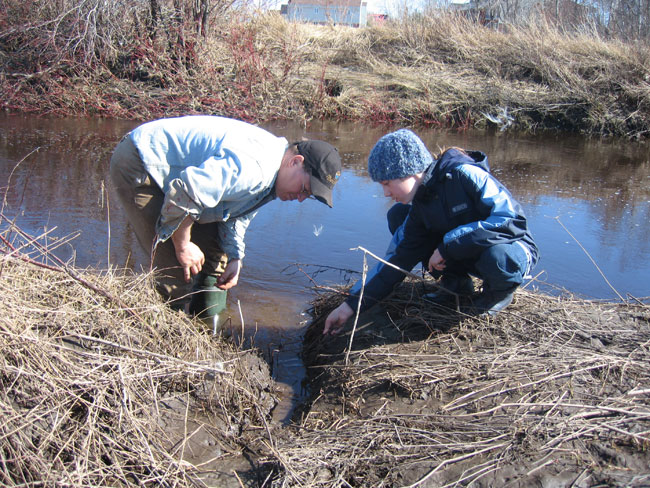
Most important of all, nature is not a museum. Most wildlife species produce more young each year than their habitat can support to maturity. The ones that don’t survive feed those that do. We are part of nature and we too can make use of the surpluses that nature produces – year after year, generation after generation – so long as we protect the habitats and ecosystems that provide those surpluses. This is called “the sustainable use of renewable natural resources”, a central conservation principle promoted by the International Union for Conservation of Nature (IUCN) and other conservation authorities. (By contrast, the synthetic materials that animal activists would have us wear are usually derived from petroleum, a non-renewable resource.)
Animal Abuse
Does all this give us the right to abuse animals? Absolutely not.
The Born Free video also shows a trapped coyote being kicked, prompting Roberts to ask, "What kind of person watches a tethered and helpless coyote writhe in pain and distress, unable to move because of the intensely unforgiving steel jaws clamped to her paw, kicks her in the side, and then finally shoots her in the chest so that her lungs fill with blood, and she dies a miserable, suffocating death?"
Most trappers would be disgusted by this scene. There is no excuse for kicking an animal, ever. Furthermore – Roberts' "intensely unforgiving" rhetoric aside – every trappers' association and trapper-training manual teaches that live-trapped animals should be killed quickly and humanely with a direct shot to the head. But this completely unacceptable behavior of one individual does not give Roberts or Born Free the right to smear the reputations of more than 200,000 North American trappers.
On the contrary, as society becomes more interested in protecting our natural environment, it is time that we learn more about these remarkable and knowledgeable men and women – the small minority among us who continue to live close to the land.
What kind of person still traps today? Far from the grotesque caricatures that animal activists like to portray, in many real and practical ways, today’s trappers are the true guardians of nature.