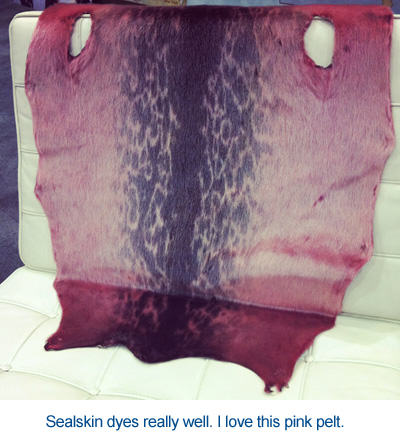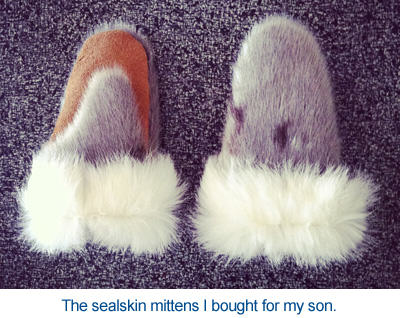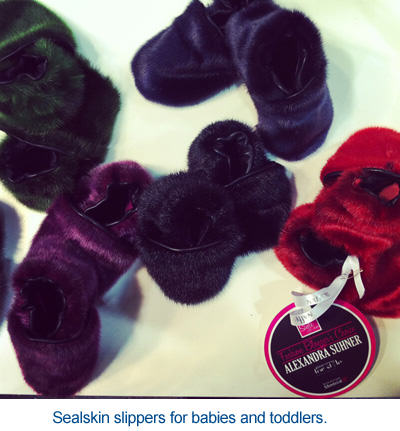
I’ve been told I’ve caught the “fur bug”, and I couldn’t agree more. I’m not only in love with this… Read More
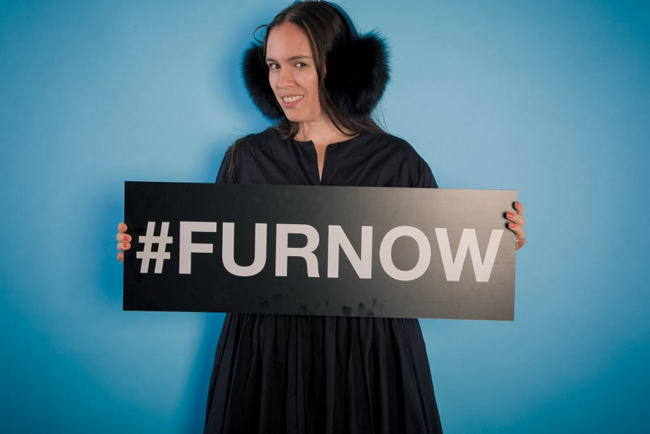
I’ve been told I’ve caught the "fur bug", and I couldn’t agree more. I’m not only in love with this beautiful, natural material, but I’m also attracted by the industry. People living off the land, small family businesses, and the fact that I’m welcomed with open arms in farms, auction houses and design studios around the world, make me so happy to be a part of the international fur family.
But there’s been one thing that’s been annoying me and I think it's time to set the record straight.
Tree Huggers and Lefties
As a campaigner for fur, I’ve been called a few nasty things by animal activists, but what annoys me most is when people in our trade refer to “tree huggers” and “lefties” as being the enemies of the fur trade.
For the record, I’m not what you would call a “tree hugger” (I find that people are much better for hugging!), but I am a tree lover and I’m sending as much love as possible towards the forests. I love nature and I want to protect it, and it strikes me as so strange that animal activists are referred to as “tree huggers” as an insult.
Aren’t all you hunters, trappers and farmers also tree "huggers” or lovers in your own way? You want to protect the land and nature too, don’t you? Where will we hunt and trap if all of the forests are cut down?
Proud to Be Left
When it comes to politics, I’m definitely “left of center” and proud of it. So are a lot of people working in the fur industry, notably Mark Oaten, CEO of the International Fur Federation.
Mark is a former senior member of the Liberal Democrats, the third-largest political party in the UK. To clarify for those of you not familiar with British politics, the Lib Dems make the US Democratic Party look like Tea Party activists by comparison.
And yet ... he and I, and many other “lefties”, love fur and dedicate a part of our lives to ensuring that this industry thrives and grows.
So why the "leftie" jibes? Why do some of us use “tree hugger” as an insult?
Let’s save our insults for the people who are trying to destroy the industry we love.
Just because I’m a staunchly left, female, half-Muslim immigrant that loves trees, doesn’t mean I can't also succumb to the fur bug. It doesn't mean I can't also love fur, farmers, trappers, and the wonderful history and traditions of this industry.
Let’s embrace the diversity of the international fur family and use our energy to ensure that this industry thrives and continues to succeed for as many years as people have been wearing fur. That’s a long time, by the way.
Do you hate PETA? Of course you do, but take comfort from the fact this has been a bad year for them…. Read More
Do you hate PETA? Of course you do, but take comfort from the fact this has been a bad year for them. And the latest pratfall by People for the Ethical Treatment of Animals, the affair of the "shocked" cat, may even make you smile.
First, there was the whistleblower whose account of her time as a PETA employee exposed their total unwillingness to rehouse animals (and the gruesome kill rate in their "shelter").
Then there was their defeat in Virginia over the right to call themselves an animal "shelter" at all.
And then there's the fact that fur has once again featured large on fashion catwalks this season.
Could it get any worse - or better, depending on your perspective? Yes, it could!
Now there's this funny, well-made video slamming PETA for their ridiculous attempt to have an earlier video (of a cat being "shocked" with animated electricity) removed from the web.
The cat, of course, was never shocked at all, but Why I Hate PETA is shocking nonetheless. It's shocking that PETA waste their resources threatening people who make comic YouTube videos about their cat! If I donated to PETA (and I'd rather flush my money down the toilet than do this), I'd be annoyed that staff were wasting time doing things like this, rather than, say, saving animals.
Oh yes, PETA don't do that. They just kill them.
WARNING: The song will get stuck in your head, but it's worth it. The video is hilarious!
We are the people of the fur trade and we will be silent no longer! That is the new rallying… Read More
About 30 people gathered in Iqaluit in March 2014 to shoot a pro-seal hunting #sealfie to protest a $1.5 million donation from funds raised by Ellen DeGeneres's Oscar selfie to the Humane Society of the United States, an organization that fights seal hunting. Photo: Emily Ridlington/CBC.
We are the people of the fur trade and we will be silent no longer! That is the new rallying cry of our proud and historic trade, and it's long overdue.
It is hard to believe that the debate about fur has been raging for a full half-century – and a bit troubling to realize that I witnessed it all!
And while it is great to see all the fur on fashion runways and in the streets this winter, we still have a way to go to repair the damage caused by 50 years of activist lies, to reassure consumers that fur is produced responsibly and ethically.
Spotlight on Sealing
It was in March 1964, that a film on Radio-Canada, the French-language network of Canada’s public broadcaster, rocketed the northwest Atlantic seal hunt into the media spotlight for the first time. No matter that the shocking scenes of a live seal being poked by a sealer’s knife (“skinned alive”) would later prove to have been staged for the camera. (1)
In the 50 years that followed, the modus operandi of a lucrative new protest industry was refined: shocking images of questionable origin, celebrities to attract media attention, and emotional fund-raising campaigns that generated piles of money to drive more campaigns.
Markets for sealskins were weakened (with a US import ban in 1972 and a partial European ban in 1983), but the newly formed International Fund for Animal Welfare (IFAW) was soon pulling in $6 million annually – more than 3,000 Canadian sealers made risking their lives on the ice floes each Spring. Greenpeace and other groups jumped onto the gravy train, with help from Brigitte Bardot. (2)
In the 1980s – with wild furs more popular than they had been since the Roaring Twenties – the protesters turned their newly-honed media, fund-raising and political skills against trapping (3), a campaign that resulted in the European Union banning jaw-type “leg-hold” traps, in 1997. No matter that traps used in Europe were untested or that other methods used there to control wildlife (e.g., poisoning muskrats in Belgium and the Netherlands) had far-reaching animal-welfare and environmental consequences. Canadian diplomats were told: “Don’t worry about your scientific studies, don’t you understand that this is about politics?”
While campaigns against sealing and trapping continue, the anti-fur focus has now shifted to calls for a ban on fur farming – but the tactics are the same.
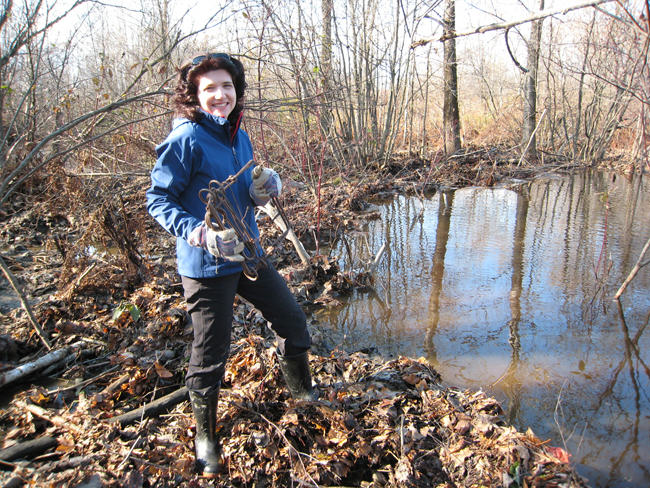
"Truth about Fur" shows real trappers, like Tanya Lynn Strong (about to set a beaver trap) pursuing their passion with full knowledge that they are on the frontline of wildlife and habitat conservation. They don't need lessons about respecting nature from urban activists. Photo: Serge Lariviere.
Absent: Voice of the Fur Trade
Throughout this debate, one voice was conspicuously absent: the voice of the people whose livelihoods and reputations were being attacked. There are several reasons for this, including the imperatives of modern media, where confrontation is “news” and “celebrities” are irresistible. Hunters, trappers and farmers, moreover, do not live in cities where most journalists are based, so they are rarely heard.
The structure of the fur trade itself – small-scale, decentralized and artisanal – also made it difficult for the industry to muster an effective response. And it didn’t help that those closest to the media and consumers – retail furriers – have little knowledge of production issues. Asking a furrier about trapping standards makes about as much sense as asking a seafood chef to explain fisheries management policy.
All this is about to change. After 50 years of turning the other cheek, the fur trade is finally speaking out more effectively. Under the banner “Truth About Fur”, fur farmers, trappers, biologists and veterinarians are setting the record straight.
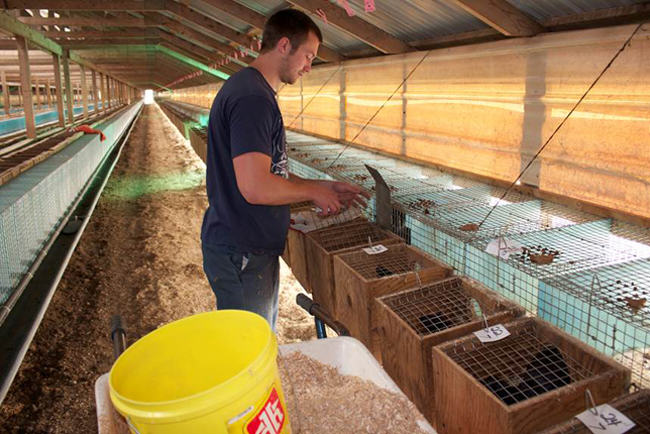
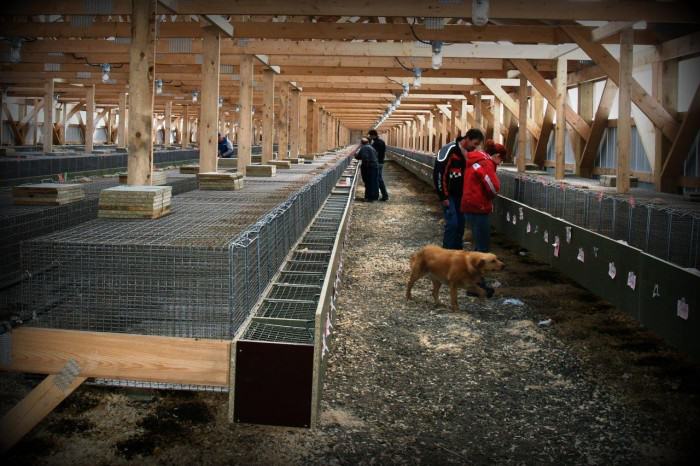
"Truth about Fur" shows real farmers at work on real fur farms. They don't need lessons about caring for animals from PeTA. Photo: Anne Troake.
Animal Activists Scrambling
The reaction of animal activists is revealing. Used to having the soapbox to themselves, they are scrambling to block or discredit the industry’s voice. I have experienced this personally.
When we refute lies or misinformation on-line, it doesn’t take long before a cyber-bully tries to shut down discussion. Rather than risk having their dogmatic beliefs shaken by facts, they shoot the messenger. Typical attacks include: “He’s paid to write this, don’t listen to him!” “He’s a fur industry troll!” Recently I was called “a sock puppet”.
I suppose it is better to be a sock puppet than a marionette, which would mean that someone was pulling my strings. But the bad news for these cyber-bullies is that we are not puppets. We are the people of the fur trade, and we will be silent no longer.
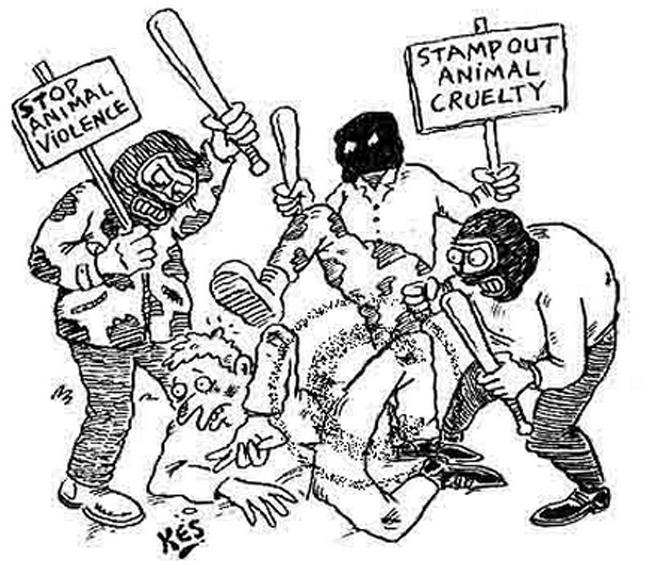
If the vicious lies and slanders leveled by activists against the fur trade for the past 50 years were directed at any other group in society, they would be denounced as hate crimes. It’s time that animal activists were exposed for what they are: intolerant bullies with little understanding of modern environmental thinking.
Aboriginal (or other) trappers do not need lessons about respecting nature from urban activists. Mink farmers do not need lessons about caring for animals from People for the Ethical Treatment of Animals (PeTA). The fur trade is not a crime against nature; it is a prime example of “the responsible and sustainable use of renewable natural resources”, a principle supported by the International Union for Conservation of Nature (IUCN) and every other environmental authority. These are some of the facts that are documented by Truth About Fur.
It is encouraging that close to 500 international designers now include fur in their collections, compared with only about 40 in the early 1990s. And it is wonderful to see people of all ages with coyote and fox trim on their parkas this winter. But it is especially satisfying to know that, whatever people choose to wear, the fur trade’s story is finally being told by the people who live it.
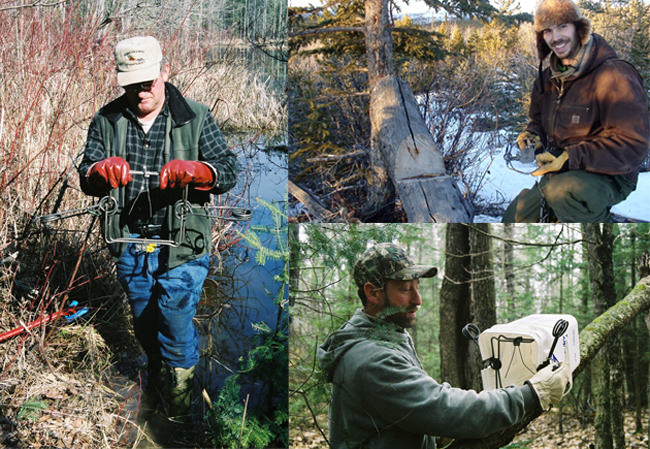
PROUD PROFESSIONALS EVERY ONE: (clockwise from left) Alcide Giroux sets a quick-killing Conibear trap for beaver in northern Ontario; Ryan Kole sets a footsnare for lynx in British Columbia; Randy Mersereau sets a dog-proof box trap for fisher or raccoon in Nova Scotia.
* * *
1) Alan Herscovici, Second Nature: The Animal-Rights Controversy (Canadian Broadcasting Corporation, 1985; Stoddart Publishing, 1991), p. 74.
When you are a passionate fur lover and working with a fur organization, you find yourselves fighting many battles against… Read More
When you are a passionate fur lover and working with a fur organization, you find yourselves fighting many battles against animal rights activists. I loathe animal rights activists. But I loathe to loathe animal rights activists, because who wants to be against any organization that purports to protect animals’ rights? Don’t we all want animals to have rights that are respected?
The problem with today’s “animal rights” groups is that their arguments are extreme. They aren’t interested in improving the lives of farmed animals, investing in continued development of better trapping techniques, supporting zoos who ensure the survival of endangered species and who participate in valuable breeding programs, working with scientists to ensure that animals used for scientific research are treated the best way possible, or re-housing abandoned animals. Instead, they want to completely ban all animal farming, trapping, zoos, pets, animal testing, leather, meat, fur, and fish. There is no middle ground for them, and I find it really annoying.
Activists don’t understand that farmers, trappers, and all of us involved in the fur industry care deeply about animals and their welfare. Veterinarians and researchers around the world have studied the techniques and systems used in farming and trapping for the fur industry and can attest to the high standards that almost every single farmer and trapper achieve. Many of us love fur because we love the land and animals. We want to preserve the land and animals and we know that in wearing natural fibres and using sustainable natural resources we are contributing towards the protection of the earth, rather than wearing throw away fashion made from non-renewable synthetics. There is no doubt that living off the land with respect to sustainability is the best thing way we could live, and that includes consumption of animals.
When I argue these things with activists, they think it is black and white. Either you kill animals, or you don’t. But it is not that at all. I am vehemently against the poor treatment of animals in farms. I’ve re-evaluated all my opinions on animal use. Personally I am not comfortable with the use of animals for entertainment or sport, including rodeos, dog shows, horse “sports,” and hunting for sport where the “catch” is not used for its skin and/or food. I buy all my meat from countries whose farming standards are extremely high (this is easy because I live in Sweden and the farming standards here are ridiculously high), and I am extremely conscious about sourcing when buying animal products (for example, leather.) In fact, my buying habits, aside from fur, are probably in line with the ways most activists shop themselves, as a large majority of them are not living vegan lives.
So why isn’t there a group to support this conscientious majority? Where are the “animal rights” activists whose mandate is to care for animals and ensure their well being, without pushing an unrealistic agenda that demands the cessation of consumption of all animals and animal by-products around the world?
This is the time of year for giving, and I would love to find a reputable charity whose mandate is to improve the lives of animals, while respecting the fact that they are one of the world’s most valuable resources. The World Wildlife Fund does an excellent job at protecting wildlife while supporting sustainable use principles, but I’d like to see farmed animals getting the respect they deserve too, all around the world. I want to see a group that supports the sustainable use of animals, while protecting them from unnecessary harm. That is what animal rights should be about.
The TV news item was about the upcoming duck season, and the soundtrack in the background was a recording of… Read More
I've watched a dozen movies where they show a flock of cranes in a V formation accompanied by goose music!
The TV news item was about the upcoming duck season, and the soundtrack in the background was a recording of somebody blowing a duck caller. The calling wasn’t bad, but what ruined it for me was the film clip they were running to illustrate duck hunting.
They were filming a flock of coots.
Unfortunately, that sort of stuff is pretty common on today’s television and movie programming. Pay attention, and you’ll see it all the time. I bet I’ve watched a dozen movies where they show a flock of cranes or ibises or some other species that flies in a V formation, accompanied by an overlaid soundtrack of - you guessed it - goose music.
Things like this are laughable, but they ought to also serve as warning flags. Every instance should remind us that not everyone is as knowledgeable about things outdoors as we are, and that simple but profound fact can (and often does) come back to bite us. In fact, the general lack of knowledge of the public about nature might well be the biggest problem we trappers, hunters and anglers face.
Sure, there are plenty of other things for us to worry about - loss of habitat to urban encroachment, shrinking access to public and private land, decreasing recruitment of young people into the outdoor lifestyle we know and love. But at the end of the day, none of those things will matter if our legal right to trap gets taken away at the ballot box.
And slowly but surely, that’s what’s happening. This year, for example, there was a petition drive in Montana to get an initiative on the November ballot prohibiting trapping on any public land in that state. (See Toby Walrath’s piece in the November 2013 issue of Trapper & Predator Caller for more on that.) They failed to get sufficient signatures this time, but if this thing passes in the future, more than a third of Montana would be closed to trapping.
Montana wouldn’t be the first state where it’s happened, either. It’s already against the law to trap on public land in Arizona and Colorado, and trappers have been so restricted and legislation-crippled in states like California, Florida, Massachusetts and New Jersey that I swear I can’t understand why any trapper would live there.
Coots Instead of Ducks, Cranes Instead of Geese
The reason this has happened, and the reason it continues to be a threat, goes right back to that coots instead of ducks, cranes instead of geese thing - a widespread lack of knowledge in the non-hunting, non-trapping public about all things wild. Most of these folks aren’t necessarily against hunting or trapping. They’re not anorexic, wild-eyed vegans. They eat meat just like we do. Nor are they stupid. They just have no interest in hunting or trapping. That’s all. And so they don’t bother to learn anything about it.
But they care about wildlife in an abstract, feel-good sort of way, and that’s why they’re susceptible to the exaggerations, half-truths and flat-out lies the zealots on the bunny-hugger side of the fence keep throwing at them. For example, it’s true what the anti’s say, that the lion does sometimes lay down with the lamb. But what the anti’s always forget to mention is that the reason the lion does so is so it can more comfortably eat the lamb.
It’s up to us to stop this brainwashing of the non-hunting, non-trapping public, and the most effective way to do it is personal communication. Every trapper has many friends and family members who don’t hunt or trap. These folks would be more inclined to believe us than they would be to believe some complete stranger telling them trapping and hunting are evil. However, they won’t get our side of the story unless we tell them.
Are you doing that with your friends and relatives? If so, thanks very much, and keep up the good work.
Have you ever wondered what it would be like if animal activists got their wish to eliminate all animal products? And… Read More
Have you ever wondered what it would be like if animal activists got their wish to eliminate all animal products? And created their version of a "perfect world"?
What would that look like?
Check out this clever musical cartoon by Fur Europe … and pass it on!
In this age of “shock imagery” being used to promote political agendas, it’s easy to paint an entire industry by… Read More
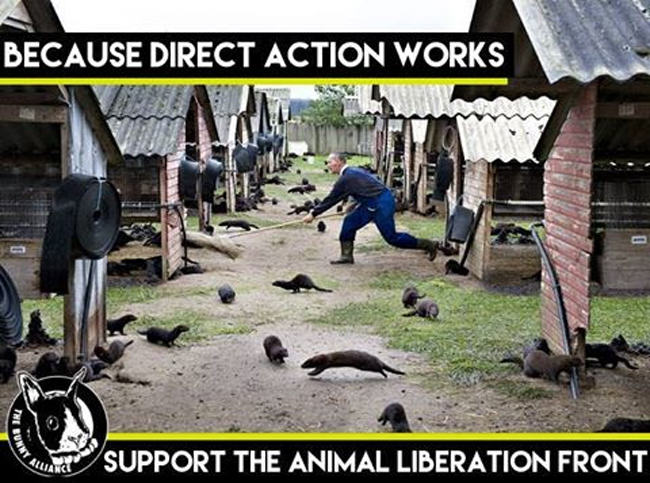
In this age of “shock imagery” being used to promote political agendas, it’s easy to paint an entire industry by the actions of a single actor. As the fur farming industry well knows, a suspect undercover video produced in China almost 10 years ago, of an animal being horribly skinned alive, is still being used to paint the industry worldwide. Though the creators of that undercover video have refused to provide the un-cut footage, identify the perpetrators so they can be prosecuted (yes, it is a crime in China) or even reveal the location or time it was made, they still try to use it as “proof” that fur production should be outlawed.
Today we continue to find that animal-rights groups, in their efforts to ban animals from our diet, clothing, medical research and pet stores, are increasingly using undercover video as “whistleblower” evidence of cruelty or neglect.
No one, especially those of us whose livelihoods depend upon healthy, well-cared for animals, wants to see an animal injured or treated badly. U.S. mink farmers, and, indeed, all animal agriculture, not only view animal welfare as a moral obligation, but know that humane care is critical to producing the quality food and fiber that America is recognized for.
Fur Commission USA supports both “whistleblower” protection laws and farm protection statutes. While extremists, often through deceit and creative editing, continue to generate and distribute shock imagery that supports their world-view, it is important to farmers in the U.S. that credible evidence of actual abuse or neglect is identified in a timely manner, and reported to the proper government authorities for investigation so that any problems can be immediately corrected. It is, and should be, all about the well-being of the animals.
Too often we see these anti-animal use groups hold back their “evidence” in order to receive maximum media coverage. They don’t want pesky issues like war, disease or human suffering to take attention away from their agenda.
Does this help the animals? No. In fact, between the time an undercover video may actually have been taken, edited and broadcast, months may have gone by. In that time, if the video is a true depiction, how much animal suffering could have been prevented?
Regrettably, it is painfully obvious that often these organizations appear to care less about the animals than they do about maximizing publicity, self-promotion and fund raising – and that should be the real crime.
Two years ago I went to NAFFEM, a large fur trade show in Montreal. I was invited as a blogger, to… Read More
Two years ago I went to NAFFEM, a large fur trade show in Montreal. I was invited as a blogger, to check out the beautiful pieces and choose some of my favourite items for sale at the show. I am a huge supporter of the Canadian fur industry (read about my reasons here) but I’ve been less vocal about the seal hunt, primarily because I didn’t have enough information to make an informed opinion about it. Well, now I do, and I would like to share it with you because I think it is important.
1. Seals are a sustainable resource and are in abundance. We live in a world where resources have become an issue, and many of us are choosing to consume products that come from renewable resources. Seal is a great example of this – there are tons of them in Canada and they are not at all at threat of becoming endangered.
Speaking of sustainability, seals are part of the reason why fish stocks are very low (although overfishing is also a big issue) and the seal hunt not only provides jobs and resources for the hunters, but also allows the fish populations to regenerate (a bit.) All major conservation groups will agree that a responsible use of resources (like hunting seals for food and clothing) is a good thing, and is often the central principle of modern conservation.
2. Seals are local. The green topic is a big one right now, and part of the green movement focuses on buying local.
Canada has a lot of great resources, but when it comes to fashion, few are 100% Canadian. Nearly all of our fashion products are in some way sourced from overseas (whether it be raw materials or construction) but seal skin and wild fur are 100% free range, local products.
3. The seal hunt supports Canadian communities. There are two major seal hunts in Canada, one in the Arctic sea (seals hunted by Inuit people) and one on the East Coast (a commercial seal hunt.) Both provide jobs and resources for those people. The meat is eaten, the fat is used for a variety of products, and the skin is sold so that these people can support themselves.
Food, as you may know, is extremely expensive in the Arctic, and there are limited jobs in that area, or in the Maritimes. The seal hunt is a very important Canadian industry for the people who depend on it.
4. The seal hunt is not inhumane. The animal rights activists will have you believe that the seal hunt is inhumane, but this is not the case.
First of all, most seals are killed with rifles (not clubbed to death.)
Secondly, there have been numerous studies done on the seal hunt, and biologists and veterinarians have all agreed that the seal hunt is no less humane than any other hunt.
5. The media paints an unfair picture. My question, after having learnt all the above, was why does the seal hunt have such a bad reputation? There are two answers to this.
First of all, seals are cute, and people are more likely to be protective of cute animals. If we were all truly concerned about cruelty and sustainability, why aren’t we doing more to save fish? Many species of fish are far more at risk than seals, yet their not-so-cute appearance doesn’t exactly inspire people to campaign for them. (Notice how we care more that our tuna is “dolphin safe” but not so much if that particular tuna is endangered.)
Secondly, the seal hunt is much more visible than other hunts, and the access to it allows for more imagery. The seal hunt happens in certain places at very specific times, and so it is very easy for activists to turn up and take photos of blood on the ice. Those same activists aren’t invited into abattoirs, and therefore we don’t have the same images in our head of cows or sheep. The fact that seals are cute, and that we have access to photos of them being killed, means the seal hunt has been very unfairly portrayed by the media and activist groups.
Many of us are so far removed from nature, farming, and hunting, and it is so easy to forget that our food comes from the land. While I will admit I don’t like seeing photos of any dead animals, I do appreciate the process and am under no illusions about the realities of eating meat and wearing animal products.
For those of us who do choose to consume animals, the best we can do is consume sustainable resources that are treated humanely – and the seal hunt is just that.
The animal rights movement claims to be motivated above all by the desire to save animals – each and every one of… Read More
The animal rights movement claims to be motivated above all by the desire to save animals – each and every one of them – from harm at the hands of humans. It also claims to support conservation efforts since it is in the wild that all animals should be living out their long and happy lives. In reality, its agenda is more anti-human than pro-animal, and its impact on true conservation efforts has been nothing but negative.
I grew up in northern Ontario with lots of fishing and hunting and some trapping in my extracurricular activities. Later I went to work in the Northwest Territories and Nunavut, first with the Hudson’s Bay Company, then with Inuit cooperatives, and finally with the Department of Environment of the Government of Nunavut.
My day-to-day contact with Inuit educated me about respectful and sustainable use of wildlife resources. I saw over three decades in the far north (I am now retired) how the animal rights agenda harmed the Inuit, driving them into industrial and less-sustainable alternatives and self-esteem-crippling welfare. It became clear to me that the animal right activists, those that play a leadership/ideological role, do not care about people.
And when you consider how their activities ultimately remove responsible users/stewards from the environment, it is evident that they do not care that much about species wellbeing or ecosystem preservation. Their focus is on the individual life, and the life of a rat or a rabbit is equal to that of a person – actually more than equal, as humans are considered to be tainted and therefore not welcome to participate in this conversation.
Animal rights activists, as opposed to real environmentalists, hate when you point out that their campaigns are anti-human rather than pro-animal.
When I first left the north to complete my masters degree, I picked up pretty quick on what has been happening on our university campuses. I learned that capitalism and profit were dirty words. Even if Russia was falling from grace by that time, there was still faith that China and Cuba would reveal socialism as the true salvation.
Then, when I returned much later to begin a doctorate, I learned that it was now cool to be anti-globalist – and that term seemed to include anything touching on business that could lead to a profit or at least a surplus. There was little interest in discussing what kinds of enterprise might be acceptable, even Inuit Cooperatives or Hunters and Trappers Associations which help people to sustain their traditions and mixed economies at the community level in remote areas. The rigidity of thought was frightening.
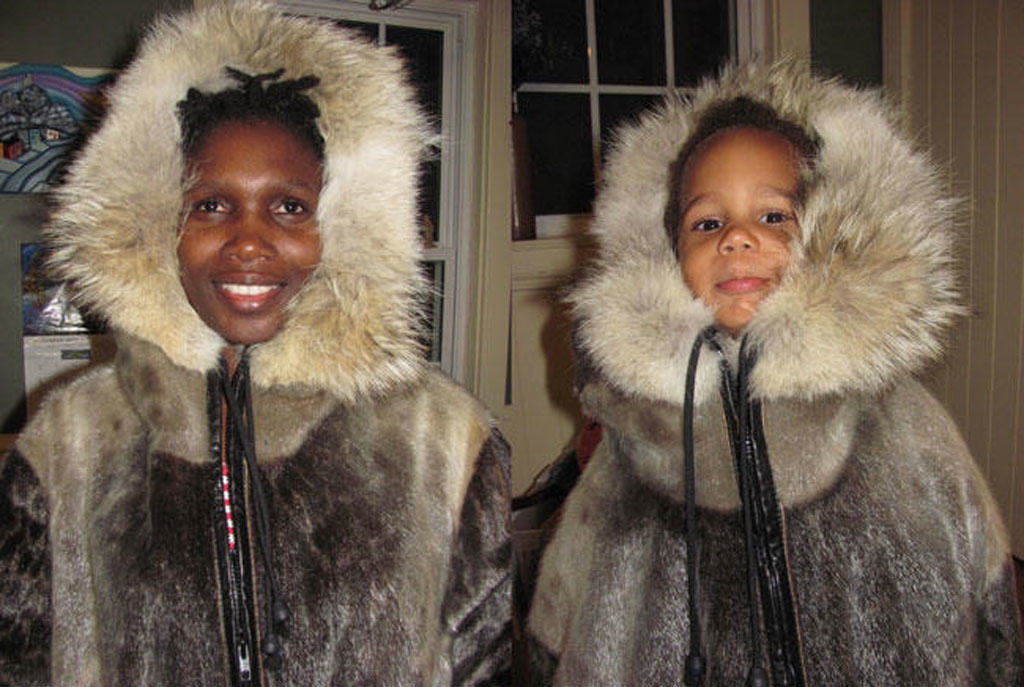
My wife Milly and son Jake, both born in Kenya and now wintering in Nova Scotia in Nunavut sealskins.
Stifling Intellectual Atmosphere
The intelligentsia found in the social sciences departments of universities were a major part of the problem; they were rarely interested in stimulating real dialogue about the complex subject of human use of wildlife resources. The articles selected for student reading, the research topics accepted by graduate committees, the entrenched simplification of bad capitalist/Western society/man as wildlife user made intellectual conversations in the university community quite predictable, in an extremely stifling atmosphere.
I came to see a disturbing affinity between the animal rights movement and the anti-capitalistcum anti-globalist mindset so prevalent on campus. Both pushed an agenda no less extreme and unreasoning than those who endorse a kill-anything-that-moves or pure capitalist ideology – except that the latter gave way to more adaptable and sustainable forms long ago.
Interesting how both "anti" camps (anti-harvest and anti-capitalist) need to demonize their opponents. I guess the complexities of real life make it more difficult to mount fund-raising or political campaigns?
Yesterday the title of a storybook caught my eye. It was The Childhood of Young Animals which looked at the early stages of animals of different species. The animal rights folks must be smiling to see young animals called "children". Luckily, my 5-year-old son seems to have an admirable ability to distinguish between the fantasy content of storybooks and Disney movies and the real lessons of the world.
Too bad the animal-rights proponents cannot do the same. If they could, they would have more respect for aboriginal and rural peoples who live outside the highly industrial and urbanized mainstream. And they might save true environmentalism from being discredited by their own sensationalistic and misleading rhetoric.
Except to a very few people, a rabbit or a rat are not equal to a human being, because the rabbit and the rat will never see the big picture, and will never feel any responsibility for other animals except their own litters. True, most human beings will never sacrifice their child's life for an animal of another species. But they will educate their young to protect the continuation of wildlife and nature in general – because our own future survival depends upon it.
Adapting to the realities of life on this planet requires careful thought and reasoning, feedback and new insights, compromise and adjustments to thought and practice. These, unfortunately, are not qualities that animal rights activists have shown much interest in developing.
Public morals and their protection are certainly a concern for governments, but is the EU abusing its authority in using… Read More
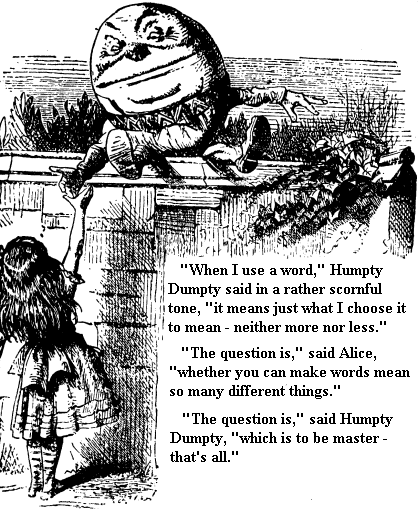
Through the Looking Glass, Chapter 6
Public morals and their protection are certainly a concern for governments, but is the EU abusing its authority in using morality as an excuse to ban trade? The World Trade Organization thinks not, and that should worry all of us.
On May 22nd, the WTO Appellate Body released a long-awaited decision about the EU ban on importation of seal products "to protect public morals". While activist groups were quick to trumpet victory, it will take some time to understand the full impact of this complex 250-page judgment.
Nonetheless, it is clear that this ruling will have far-reaching implications for anyone involved with animal production or trading in animal-based products.
On the positive side, the ban (implemented in 2010) was condemned by the WTO’s highest authority for “arbitrary and unjustifiable discrimination” against products of other countries, and the EU was instructed to amend its legislation accordingly.
The main issue here is an exemption for Inuit hunters. The WTO noted that “virtually all” Greenlandic (i.e., EU) seal products benefitted from this indigenous exemption while the “vast majority” of Canadian seal products did not.
It therefore found that the ban was discriminatory against Canada. In reality, the exemption did little for Inuit hunters anywhere, because the ban (and related campaigning) eroded markets for all seals. (1)
The real goal of the exemption was to provide cover for activists and EU politicians, since concern for indigenous rights is almost as politically correct as animal rights among the chattering classes, in theory at least.
The WTO, to its credit, saw through the ruse and denied that such racially or culturally defined exemptions “can be reconciled with, or is related to, the policy objective of addressing EU public moral concerns regarding seal welfare”.
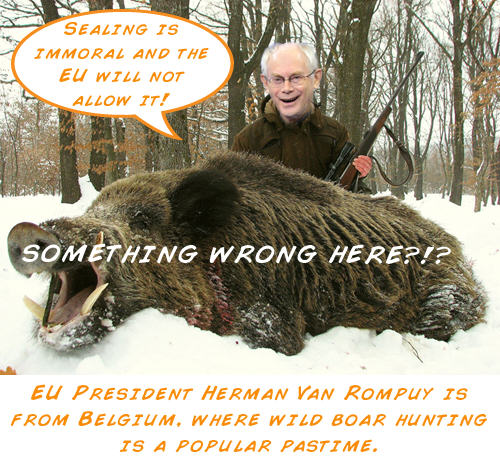
The EU was hoisted by its own petard. If the way in which seals are hunted is so morally repugnant that a trade ban is justified, how can these same hunting methods be acceptable when employed by Inuit people? It will be interesting to see how the EU responds.
Of much greater importance, however, is that the WTO accepted the EU’s claim that trade restrictions based on animal-welfare concerns can be justified“to protect public morals”.
Until now, the WTO has refused to tolerate any ban based on the “means of production”. And for good reason: Say goodbye to world trade if countries can ban each other’s products because they don’t agree with their worker-safety regulations, environmental-protection controls – or now, animal-welfare concerns. (2)
No wonder that animal activist groups are cheering: a brave new world of political campaigning has just opened for them!
"This is a very exciting development,” gushed Sheryl Fink, director of Canadian wildlife campaigns for the International Fund for Animal Welfare (IFAW). “Hopefully it will have positive repercussions for other animals that are affected by trade as well." (3) Fur trappers and cattle ranchers take note!
But whose “morality” is really being protected here?
The EU had argued that “because of the way in which seals are killed, the EU public regards seal products from commercial hunts as morally objectionable and is repelled by their availability in the EU market.”
To justify this claim, activists and EU politicians often cite an Ipsos MORI public opinion survey commissioned by Humane Society International (HSI) and IFAW. Conducted in 2011, in 11 countries, the study found that 72% of Europeans supported the import ban on seal products. (4)
The responses to another question in this study, however, are less often quoted. Europeans were asked “how much –if at all – would you say you personally know [about the seal hunt]”. The findings are astounding: 25% of Europeans admitted that they had “never heard of it”.
Another quarter (23%) said they had heard of the seal hunt, but knew “nothing at all”. And another 30% said they knew “not very much”.
In summary: 78% of Europeans say that they know little or nothing at all about the seal hunt. So much for the burning moral issue that justified putting the world trading system at risk!
But despite knowing nothing, 72% of Europeans support the import ban on seal products. That shows what 50 years (sic!) of activist campaigning can do. And it shows why anyone involved with animal production should now be very concerned.
* * *
(1) Inuit leaders have claimed from the start that the exemption for the products from Inuit hunting would not protect their people.
Activists in Europe and North America claim that it is “unethical” to use animals for fur. In this post I… Read More
Activists in Europe and North America claim that it is “unethical” to use animals for fur. In this post I would like to explore this question of ethics, using farmed mink as an example.
Some would say that, from the perspective of the animal, it really doesn’t matter what it will be used for. What matters for the animal are the conditions in which it is raised and the way in which it is slaughtered.
Others insist that breeding animals for fur cannot be compared with raising them for meat, as the latter is a necessity and the former a superfluous luxury.
I think that both positions are oversimplifications. To stop with either of these arguments is a form of intellectual laziness or, more often, an easy way to win a debate against someone who has not thought very deeply about these issues.
To understand why I say this, try the following mind experiment: Would you agree to raise dogs (in the best of conditions, of course) for the sole purpose of killing their puppies (painlessly) soon after birth, because someone was ready to pay you to do so? Similarly, most of us would probably be shocked to learn that someone was buying art, just to destroy it. And here there would not even be any question of suffering.
These two examples show that the purpose of our actions does play a role in our determination of what is ethical.
I believe that a more honest way to think about the ethics of animal use is to consider the following two parameters or axes:
• the first (“x”) axis would indicate the welfare (or harm) caused by the way the animal is raised and killed; • a second (“y”) axis would indicate the necessity or value of the resulting product or service.
Note: a third axis could plot environmental impact of the activity, but let’s leave that aside for now.
Some animal activists seem to agree with my idea. The Party for the Animals, in the Netherlands, for example, states in its guiding principles: “Any form of handling and use of animals should be justified by a careful weighing of the seriousness of the human interests involved on the one hand and the consequences for the animal on the other. The less necessary the human interest is and the more damaging the consequences for the animals are, the more this reduces the moral justification to harm the animals’ welfare.”
For those who remember their college philosophy classes, this is a typical “utilitarian” argument; the benefit must outweigh the costs.
When we plot mink farming on our two-axes model, the results will surprise most people.
On the welfare (“x”) axis, mink farming scores very well. Studies have repeatedly shown that mink are healthy and unstressed on mink farms; this is the only way to produce high-quality fur. The fact that mink are euthanized quickly and painlessly right in their barns is also an important welfare advantage, since transportation to distant abattoirs (to assure food safety) is recognized to be the most stressful part of the life-cycle for food animals.
But what about the “y” axis? Obviously mink fur is not a necessity. One might argue, however, that clothing is a necessity and that mink is a very durable type of clothing. As explained elsewhere in this website, fur is a natural, sustainable and long-lasting clothing material. A case can be made that a fur coat is one of the most environmentally friendly pieces of apparel you will ever own.
Furthermore, the “necessity” of meat – at least in the quantities that most of us consume -- is not as clear cut as we often assume.
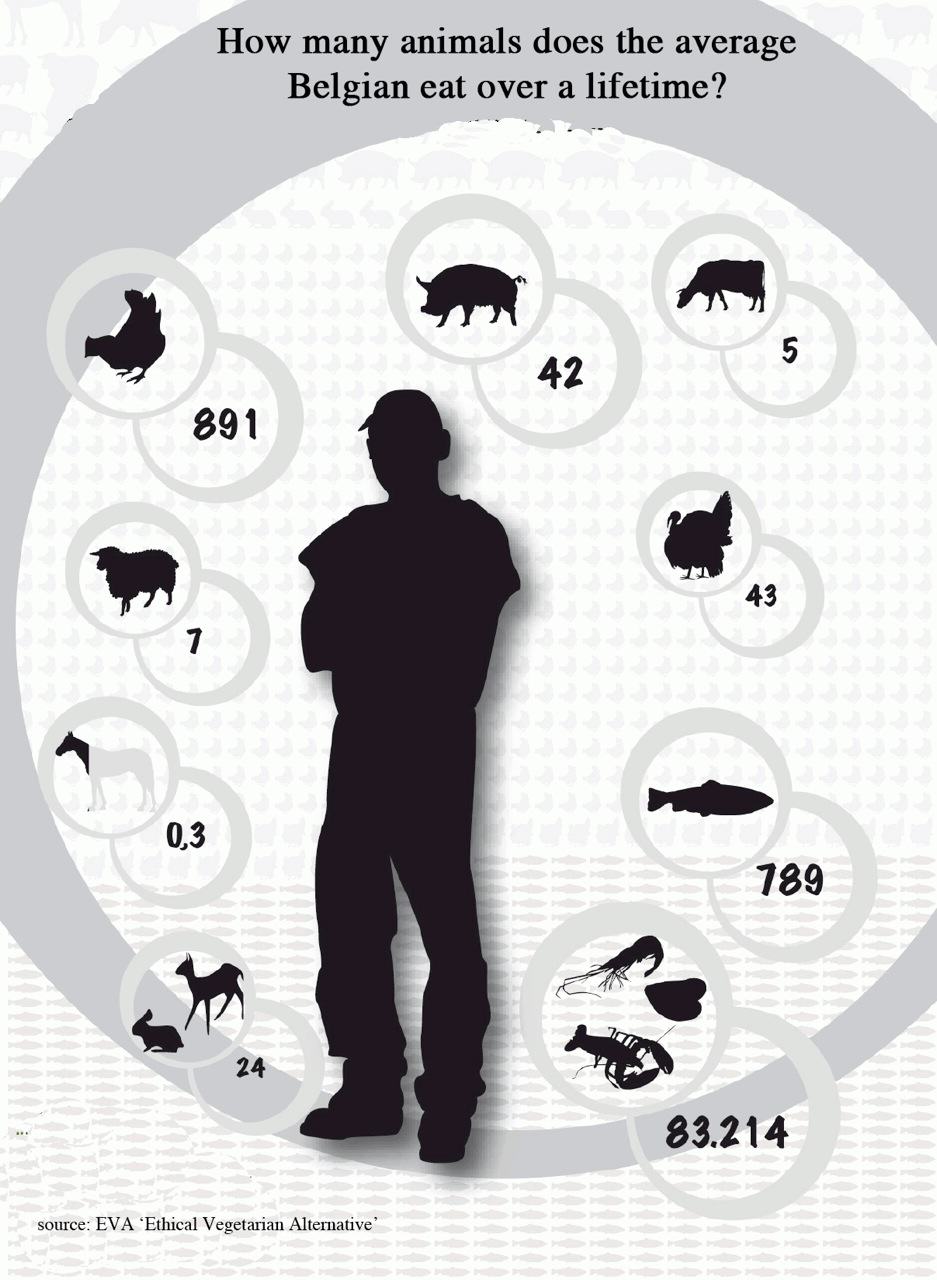
How many animals does the average Belgian eat over a lifetime?
About 95 % of Westerners use animal products on a daily basis. In my country, Belgium, the average person eats more than 1,800 animals in a lifetime (and that is without counting fish and shellfish, which would hugely increase the count.) The equivalent number for the USA is between 2,200 and 2,400 animals (again excluding seafood). Most of these animals are poultry, as chickens provides many less servings per life than a larger animal. By some estimates, chickens make up 90% to 95% of the animals we eat.
Many nutritionists now believe that the average person needs as little as 200 grams of meat per week to remain healthy. The average US citizen currently consumes between 10 and 15 times that amount. We are not saying here who is “right” or “wrong”. We are noting that there is a wide range of opinion on this question. But whatever the ideal consumption level might be to maintain health, it seems clear that we eat as much meat as we do because we like it. It is an emotional, cultural and personal choice, not a “necessity”.
Following this logic, it is clear that much of our current meat consumption could be considered to be just as “unnecessary” as mink fur. More to the point, the concept of “necessary” and “unnecessary” goods or services appear to be culturally defined and therefore are subject to personal choices.
It is interesting to note that even philosopher Peter Singer, the father of the modern animal-rights movement, stated in his landmark book “Animal Liberation” that it is hypocritical to criticize the seal hunt or the fur trade while most people are eating meat every day.
It seems that animal activists have no real justification for their claims that it is “unethical” to wear fur.
“…Father believed that there was an animal even more dangerous than [humans], and one that was extremely common too: the… Read More
“…Father believed that there was an animal even more dangerous than [humans], and one that was extremely common too: the redoubtable species Animalus anthropomorphicus, the animal as seen through human eyes. We’ve all met one, perhaps even owned one. It is an animal that is ‘cute’, ‘friendly’, ‘loving’, devoted’, ‘merry’, ‘understanding’….In [all these] cases, we look at an animal and see a mirror.” Life of Pi, Yann Martel.
Two recent news stories cast a revealing spotlight on our muddled thinking about animals.
Putin caresses a Persian leopard cub in Sochi, Feb. 4, 2014. (Alexey Nikolsky/AFP//Getty Images)
First, in Sochi, president Vladimir Putin was photographed caressing a young Persian leopard cub at a newly-constructed breeding and rehabilitation center.
“The restoration of this endangered species will be part of the heritage of these games; the natural environment is much improved thanks to the Olympics,” said Mr. Putin.
Take that, environmental activists with all your whining about the construction of Olympic installations in a pristine wilderness!
One local activist was just sent to prison for three years for painting protest graffiti on the wall of a construction site. But there’s nothing to soften a tough politician’s image like cuddling a baby animal…especially a “charismatic” leopard or other big cat.
Next stop, Denmark, where the Copenhagen Zoo sparked animal activist ire – and an international media feeding frenzy – for euthanizing an 18-month-old giraffe named Marius.
As part of the European breeding program, the zoo must maintain genetic diversity in its limited space, so Marius was redundant.
Marius the giraffe. Photograph: Keld Navntoft/AFP/Getty Images
The European Association of Zoos and Aquaria (EAZA) fully supported the Copenhagen Zoo’s decision. But many were horrified when Marius was lured to lower his graceful 2-meter-long neck with a piece of rye bread – his favorite snack – and then shot through the brain with a captive-bolt pistol.
Even more shocking to many was the zoo’s decision to chop dead Marius into large pieces in front of visiting children and their parents, before feeding him to the lions.
Bengt Holst, scientific director of the Copenhagen Zoo was admirably calm and intelligent as he cut through the media sensationalism with plain talk.
“I know the giraffe is a nice-looking animal, but I don’t think there would be such outrage if it had been an antelope, and I don’t think anyone would have lifted an eyebrow if it was a pig,” said Holst.
Marius, a male giraffe, lies dead before being dissected,. Photo: AP
“There are 600 deer culled every year in a nature park north of Copenhagen, and no one gets upset. Humans have changed nature and we have a responsibility to maintain a balance.
“Humans kill and eat more than 50 billion animals a year. We have killed 5 giraffes since EAZA’s record-keeping began in 1828. Inbreeding can increase a population’s susceptibility to disease and other chronic conditions that can threaten the future survival of species under our care,” he explained patiently.
Nor did the zoo make any apologies for cutting Marius apart in front of children.
“It is not cruel, it is natural. Carnivores eat meat. If it was not the giraffe, it would have been a cow – what is the difference?
“Nature is not Disneyland where animals are only born but never die. In nature, animals must also die. Lions eat giraffes in nature. Why ‘protect’ children from reality?
“These children had the opportunity to see the wonder of the giraffe: for example, the huge heart that is needed to pump blood two metres up to their brain. They learned something in a way they would never learn from a book,” said Holst.
The carcass of Marius, a male giraffe, is eaten by lions after he was put down in Copenhagen Zoo. Photo: AP
All very logical and scientific. But did he really like these animals, asked a journalist? “Of course I like these animals, that is why we are working so hard to protect their future. Sometimes you have to do things that are not so pleasant, but it is important to be intelligent about such things,” said Holst.
Not least interesting in this story, of course, is our own conflicting feelings about “charismatic animals”. Like it or not, Putin’s leopards (or, in this case, Danish lions) eat giraffes like Marius.
This reminds me of one of the most impressive scenes in the 2005 film The March of the Penguins when, after enduring incredible hardships, our heroes finally make it to the sea, only to be torn to bits by leopard seals.
For some reason, anti-seal-hunt activists never feature this footage on their protest websites?!
But let’s be honest: none of us are totally free of anthropomorphism. It takes a pretty cold-hearted person not to feel some sympathy for long-lashed, dewy-eyed Marius. Or for fluffy “baby” seals. Or for almost any animal staring wistfully into a camera lens. Especially when most of us now live in cities and rarely see a wild animal.
When overpopulated beavers flood our roads or raccoons move into our attics, however, it is remarkable how fast perceptions can change!
Manage Consent
To provide the best experiences, we use technologies like cookies to store and/or access device information. Consenting to these technologies will allow us to process data such as browsing behavior or unique IDs on this site. Not consenting or withdrawing consent, may adversely affect certain features and functions.
Functional
Always active
The technical storage or access is strictly necessary for the legitimate purpose of enabling the use of a specific service explicitly requested by the subscriber or user, or for the sole purpose of carrying out the transmission of a communication over an electronic communications network.
Preferences
The technical storage or access is necessary for the legitimate purpose of storing preferences that are not requested by the subscriber or user.
Statistics
The technical storage or access that is used exclusively for statistical purposes.The technical storage or access that is used exclusively for anonymous statistical purposes. Without a subpoena, voluntary compliance on the part of your Internet Service Provider, or additional records from a third party, information stored or retrieved for this purpose alone cannot usually be used to identify you.
Marketing
The technical storage or access is required to create user profiles to send advertising, or to track the user on a website or across several websites for similar marketing purposes.